Friday, February 3, 2017

Hidden Figures

Book: Hidden Figures
Basic Information : Synopsis : Thoughts : Evaluation : Book Group : New Words : Book References :
: Table of Contents : References

Basic Information:
 Author: Margot Lee Shetterly
Edition: eBook on a Nook
Read:February 3, 2017
289 pages
Genre:  History,  Biography, Science
Rated:   out of 5

Synopsis:
Why were black women even present at Langley field? There was a need during World War II for people who could work numbers. As there was a number of unemployed black females, the people at Langley were interested in getting help, no matter what the source.

These women proved to be talented and showed that black women were an underutilized resource. The books talks about some of the segregation these women encountered, along with the presidential orders which allowed them to work.

Once the war ended, the question became, what do you do with these women? The Cold War started soon after, with its accompanying need for smart, mathematically inclined personnel. Then the space program.

The book follows the stories of several of these women through the years, showing what they accomplished, their struggles and their successes.


Thoughts:

Prologue
The author was raised in Hamptom where Langley was. Shetterly notes that when she was growing up that the face of science was brown. Interesting that to me this would not be how I would picture science. But that is more of my problem. But it would be sort of interesting that our perspective, no matter what we are, is shaped by our upbringing. It is up to us to change our perspective to match reality.

A door opens
Shetterly notes that civil rights are linked to economic rights. This is a modern observation, not that it is a wrong it. It is just putting things into perspective.

It is observed that NACA, the forerunning was all about practical solutions.

Mobilization
Ideals without practical solutions were empty promises. Some politicians could use this line.


The double V

The blacks during World War II were asking themselves the question: Is the kind of America I know worth defending? This is a question which each generation should ask. It is a question which is needs to be asked today.  Shetterly notes that it was their own pride, their patriotism, their deep and abiding belief in the possibility of democracy that inspired the Negro people. It is the hope for something better which drives us to continue even if we are struggling now. Take away hope and you end progress. But Shetterly also notes that it was a failure to secure the promises of democracy is what defines the black habitation in this country.

Turbulence

Katherine Globe/Johnson treated her male engineers as equals to her in there curiosity and intellect.


What a difference a day makes

Ideas is what drive people to do great things. Dorothy figures out in our to be part of the party (this is the Mercury Project and the question was how to do it.), she needs to be where the ideas are created. That is when the engineers get together and go through problems, she needed to get in there. But females were not allowed. Dorothy pretty much got in because she was persistant. That is what will make or break you as a person who gets to be part of the party.

I had never correlated the demise of the Jim Crow laws with the Russians threat of Sputnik. The US needed the type of war drive it got during World War II. This allowed blacks to serve, to work and build up resumes which were impressive. The Russians did the same thing during peaceful times.


Outer space
This is the one place which Shetterly approaches a Chestertonish type of phrase. They had to get over the high hurdle of low expectation. This is so true. You get what you expect.


Model behavior
black people frequently disqualified themselves. Shetterly notes this that they would not be competitive because that is what they were brought up with. A black is not as smart as a white, a black is not capable. If anything in this book is a point, it is that blacks can do anything that a white can do. The other point is that anybody needs to have realistic understanding of their own capabilities and act on it. Either increase their capabilities where they are weak, or capitalize on their strengths.

She earned her engineering title through hard work, talent and drive,...
I am not sure there is anything special in this statement. Unless you are given a title because they are mistaken or do not know any better, that is the usual course for promotion.
  • Degrees of freedom
  • Out of the past, the future
  • America is for everybody
  • To boldly go.

Epilogue
The power of the history of NASA’s black computers is that even the Firsts weren’t the Onlies. In others words, we were seeing a continuing phenomenon. If there was a few black women who could do this work, that would say NACA/NASA was getting the cream of the crop. But there was many of these people who did the work, This would cause a change in policy.

As much as Katherine Johnson’s technical brilliance, it’s her personal story and her character that shine on us like a beacon. I suspect that in many cases the person who uses their abilities to a great extent at work also is a person who will go the extra mile outside of work. They will be involved in many things, gathering fulfillment from those outlets in the community.

The women seem to be happy doing that, so that’s just what they do. This is the quote from when Christine Darden asked her boss, why she was not getting put into the engineering pools/groups. This speaks more to his frame of reference than to an innate prejudice. Once this was brought up she was promoted. In many ways this is a common occurrence with supervisors. It is assumed that those who want something will make their desires known. In some ways, a supervisor is in an awkward position. If he promotes someone who does not want it, that leads to dissatisfaction. If the person remains silent, but does want the promotion, how does the supervisor know? The way is for the supervisor to know their people. But that at times is hard to do when staff wants to keep their distance.

Christine had already done the work; Langley just needed someone who could help it see the hidden figures. This is in reference that Christine Darden had been a very good worker and was bumping against a dual ceiling based upon race and gender. Once Gloria Champine assembled the data that others with similar background and achievement had gotten promotions, then Darden was recognized and promoted.

The question which I keep coming up with is, is the reason for lack of promotion due to gender and race, or because others have a better sense of promotion? I am reading another book called Quiet! The Power of Introverts. In there it talked about how introverts do not tend to be noticed, consequently, they are not promoted.  Is this a similar phenomena with females and African-Americans? (On the African-Americans, that may not be totally true.) What I have noticed in fields such as programming and mathematics, many of the people in those fields tend to be more content to let their work speak for them rather than being self-promoting. This is not 100% true. There are some people when I was a supervisor which in retrospect should have gotten promoted but they were not self-promoting.


A sister(cousin?) installation to Langley was Ames Labs at Moffett Field. This is close to where I grew up at and have visited it some in my youth.

Samuel P Langley is talked about in the book The Wright Brothers by David McCullough. He did do a heavier than air structure. But they kept crashing

The Langston Hughes poem, Harlem I think encapsulates what the author is trying to say:
What happens to a dream deferred?

Does it dry up
Like a raisin in the sun?
Or fester like a sore—
And then run?
Does it stink like rotten meat?
Or crust and sugar over—
Like a syrupy sweet?

Maybe it just sags
Like a heavy load.

Or does it explode?


Biographies
  • Gloria Rhodes Champine
  • Katherine Johnson
  • Ed Dwight
  • Christine Darden


Evaluation:
I suspect this book will elicit different views depending on what your experience has been. If you see a lot of decisions based upon a person's outward features, even if it is subconscious, you will be offended by what these women went through. If it was something which you recognize that a person has to work to be recognized, then you might be more willing to see how the story plays out. Even with the later, you also see that these women would not have been given the opportunity without World War II and the labor shortages.

The book is about the black women who staffed the Langley NACA/NASA center starting during World War II. First what part they played in the aeronotic development of planes during this war. Then later on, how they were used to get an American into space and eventually to the moon.

Shetterly falls into this story from a standpoint of personal interest. She grew up with these women without realizing their struggles nor their importance. I do not know why, but I do not get the feeling of personal tie-in with which the author should have in the story. After reading their histories I know their accomplishments, but not them.  I am also left with questions of, is their a tie-in with these women and the civil rights movement of the 60's? Or are these women isolated?

All in all, I am glad I read the book, just wished the stories would have been told better, deeper than an 8th grade history book.

 
Notes from my book group:

Questions for my book group:
Many of you were interested in reading this book. What were you hoping to get out of it? Did it meat your expectations?


Why did the author write this book? From what perspective did Shetterly write this book from? If this was told by a white, or a male or an older person, how would it have changed the book?


Is the title, Hidden Figures, a good title for this book? What would have been a better one?


Where does the author get her information from?


In the prologue, the author says that when she was growing up, the face of science was brown. How so? How does our own perception guide our focus? Later on Shetterly says, They had to get over the high hurdle of low expectation.


The NACA was all about practical solutions. What strengths and weaknesses does this focus have? How are we focused today and how does this focus shape what our future will be like? The author also note that : Ideals without practical solutions were empty promises .


It seems like each generation asks the same question which the blacks asked at the start of WWII: Is the kind of America I know worth defending? How did the blacks of that generation work through this question? What is our response to that question today?


If there was not prejudice, would everyone rise to their levels of competency in our society? If not, what other factors are involved? If so, in what ways does our society inhibit this ascension? Dorothy got into the engineering group because of her persistence. How much of your own determination makes a difference about how far you get?


Are you satisfied with this book? What did you want to see more of? Less of?


Describe the culture talked about in the book.
  • How is the culture described in this book different than where we live?
  • What economic or political situations are described?
  • Does the author examine economics and politics, family traditions, the arts, religious beliefs, language or food?

What thoughts came out of this book which will be useful to you?


Is this a change the world book? What implications are there from this book? Is there situation in our country which needs to be recorded like this? To be changed? What ideas are there which are controversial to our ears today?


What was memorable from this book? Talk about specific passages that struck you as significant—or interesting, profound, amusing, illuminating, disturbing, sad...?

New Words:
  • eponymous (chp Prologue):  giving their name to something or named after a particular person.
  • shibboleth (chp A door opens):  a custom, principle, or belief distinguishing a particular class or group of people, especially a long-standing one regarded as outmoded or no longer important.
  • anodyne (chp Manifest Destiny): not likely to provoke dissent or offense; inoffensive, often deliberately so.
  • Schlieren photograph (chp Model behavior): a visual process that is used to photograph the flow of fluids of varying density
  • pericynthion altitudes (chp America is for everybody): As used in the space program, this refers not to the orbit of the Moon about the Earth, but to orbits by various manned or unmanned spacecraft around the Moon. The altitude at apoapsis (point farthest from the surface) for a lunar orbit is known as apolune, apocynthion or aposelene, while the periapsis (point closest to the surface) is known as perilune, pericynthion or periselene, from names or epithets of the moon goddess.
  • grise (chp Epilogue):  a powerful decision-maker or adviser who operates "behind the scenes" or in a non-public or unofficial capacity
Book References:
  • W.E.B. DuBois The Souls of Black Folk
  • Langston Hughes’ poem Harlem

Good Quotes:
  • First Line: “Mrs. Land worked as a computer out at Langley.”my father said.
  • Last Line:  The greatest part of her legacy-Christine Darden and the generation of younger women who were standing on the shoulders of the West Computers-was still in the office.
  • Ideals without practical solutions were empty promises. Chp Mobilization
  • Present your case, build it, sell it so they believe it. Chp Outer Space 
  • the best thing about breaking a barrier was that it would never have to be broken again. Chp  Model Behavior
Table of Contents:
  • A door opens
  • Mobilization
  • Past is prologue
  • The double V
  • Manifest destiny
  • War birds
  • The duration
  • Those who move forward
  • Breaking barriers
  • Home by the sea
  • The area rule
  • Serendipity
  • Turbulence
  • Angle of attack
  • Young, gifted, and black
  • What a difference a day makes
  • Outer space
  • With all deliberate speed
  • Model behavior
  • Degrees of freedom
  • Out of the past, the future
  • America is for everybody
  • To boldly go.


References:

Monday, December 26, 2016

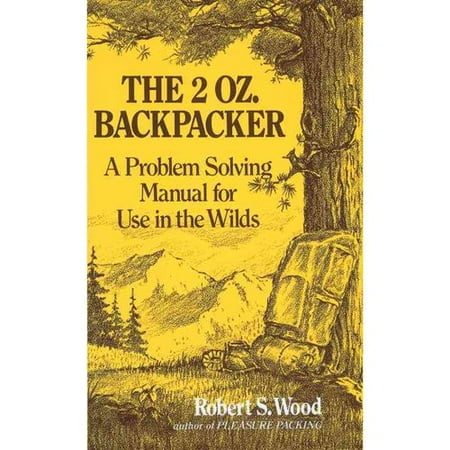
The 2 Oz. Backpacker: A Problem Solving Manual for Use in the Wilds

Book: The 2 Oz. Backpacker: A Problem Solving Manual for Use in the Wilds
Basic Information : Synopsis : Thoughts : EvaluationNew Words : Book References : Good Quotes
: Table of Contents : References

Basic Information:
 Author: Robert Snyder Wood
Edition:eBook from the Fresno Public Library
Read:December 26, 2016
153 pages
Genre:  Backpacking, Outdoor
Rated: 3  out of 5

Synopsis:
A collection, organized by five different subjects, of wisdom related to backpacking.


Thoughts:
This book is a reminder about reading older outdoors book. Times and techniques have changed. Ways of doing things 25 years ago which seemed OK have been superseded by better ways of doing things and definitely with better equipment.

Still, there is something to be said about older wisdom. Robert Wood does have knowledge and the more down to earth advice still hold true.

So this book is a reminder: all advice, whether old or new should be validated.

  • Walking
    • Wood reclaims the discovery of youth. Children which were dragging and you wonder how could you have ever inflicted such pain on them say things like, when can we go again? That is when you know you have done something right on the trip.
    • Footwear will be a great part of the determinate of how well you enjoyed your trip. He points out that the rule of thumb is an ounce on your foot is like five on your back. Wonder what he would think about going out in trail runners these days. He does allude that this is starting to taking off and seems in favor of it, depending on your hike.
    • He talks about how he splits up pack items with his partner. Basically trying to keep the same weight, unless there is a large difference in body size. This is the wisdom which my wife and I came up with. We balance out hiking speeds and endurance until they come out the same.
  • Cooking
    • Knowing how to set up the kithen for efficient operation and make the best use of the food you brought can make the difference between misery and a successful trip. You get agreement with me here. We have simplified this to being more of a boiling water event and wait 10 minutes for the food to be ready. Much more relaxing.
  • Navigating
    • He talks about estimating speeds. He has come up with the same parameters as I have: basic 2 mph on level ground with a “normal” pack. For each 1,000' climb, ad an hour; for a descent, add a half an hour. Pack weight will alter this equation.
    • The lost backpacker's ability to regain his sense of direction and rediscover his location... depends largely on his ability to control panic and fear so that logic and reason can prevail.
    • He says that precise compasses are generally not needed. A general direction is usually good enough for guidance.

Evaluation:
Lets begin with that this book is about 25 years old when I read it. Its purpose is to be an on the trail assistant to help a backpacker figure out what is the best thing to do in common situations. The 2 oz' comes because Wood wanted this book to be light enough that it could be carried by a weight conscious  person.

Does Wood accomplish his goal? It is a mixture. He is at his best when he describes things like how to select a camp site or getting into shape. But there is some things which are dated and should not be followed, such as wrapping your feet in plastic or choices of equipment or when to use a fire to cook.

My recommendation on this book is it is ok to read. But use with caution and double check his advice with more recent wisdom.


New Words:
Book References:
  • Freedom of the Hills from Mountaineers Books

Good Quotes:
  • First Line: Readers have asked for a featherweight source bok they can justify carrying along with them in the wilds, something that will provide a backup to their own experiences.
  • Last Line: Fifteen minutes spent making notes at the end of a trip will save two hours of preparation a month later.
Table of Contents:
  • Introduction
  • Walking
  • Keeping Fit
  • Camping
  • Cooking
  • Navigating
  • My Basic Checklist

References:

Thursday, December 22, 2016

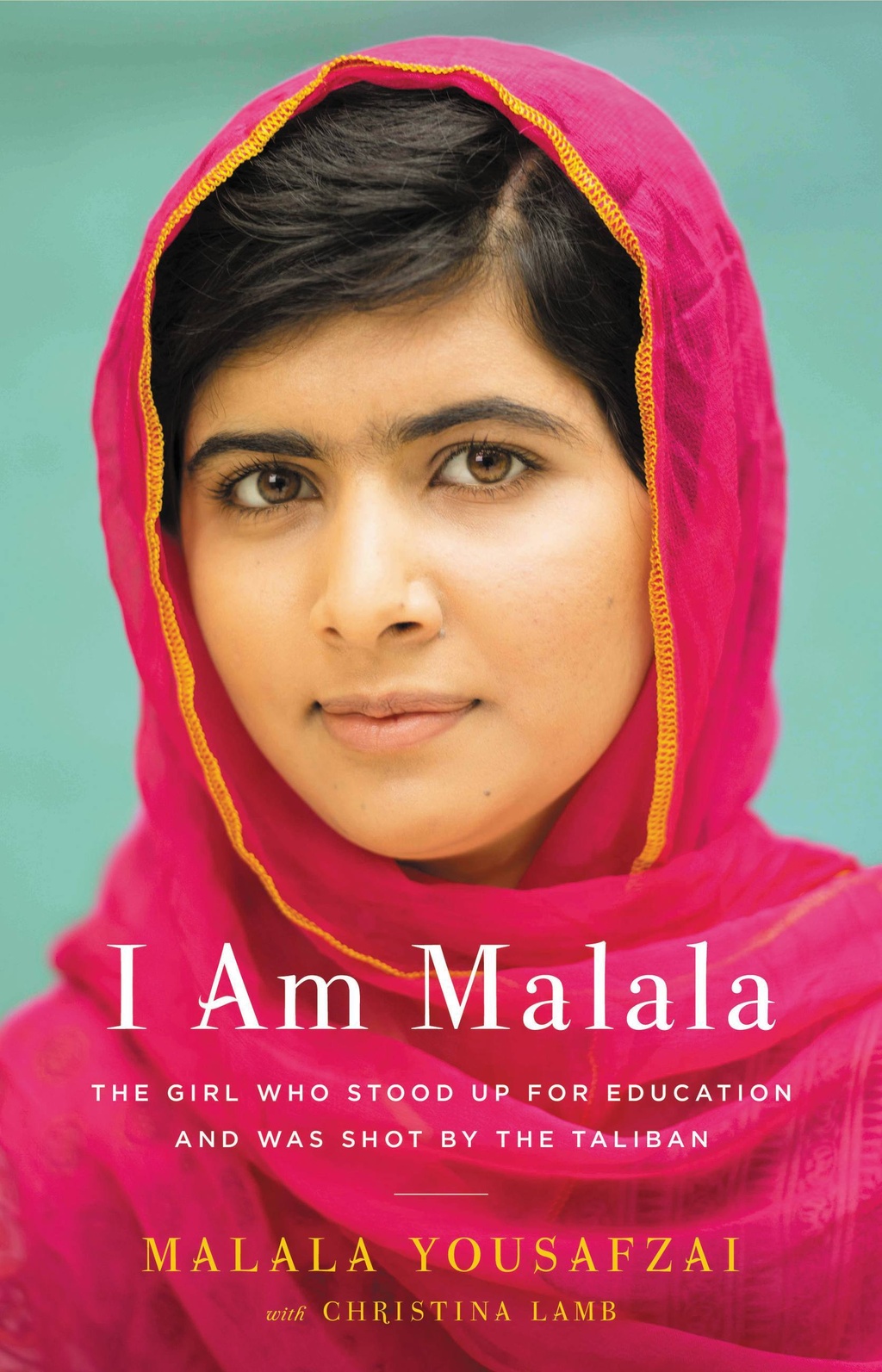
I Am Malala

Book: I Am Malala

Basic Information : Synopsis : Thoughts : Evaluation : Book Group : New Words : Book References : Good Quotes
: Table of Contents : References

Basic Information: Author: Malala Yousafzai
Edition:eBook on Overdrive from the Fresno County Library
Read: December 22, 2016
333 pages
Genre:  History,  Biography
Rated: 4.5  out of 5

Synopsis:
Malala rose to fame as an advocate for female education, particularly in Muslim regions of the world. Then she was shot in the face and nearly died. This is her story from the time she was a child in Swat Pakistan. It follows her desire to learn and follow in her father's footsteps of being educated.

It is a very personal story, as well as one where she advocates in each step of the way for education and women's rights. There is much chatter about her conversations with her friends-remember, these are grade school females. But there is also the retrospective understanding Malala brings to her story, the understanding that her purpose is bigger than just one girl's education.

Thoughts:

Birmingham, England, June 2015
Malala talks about how she has all the comforts of modern life in England. But there is a sense of yearning for home. Are we ever complete when we are not home? Or in her case, where the danger she faces she cannot go back home for a very long time, if ever? Sadness is the feeling conveyed. GK Chesterton wrote a whole chapter in a book, Manalive, which talks about not being content until the protagonist returned back home. There is nothing more beautiful than ones home.

Growing up in a school
He [Malala's father] thought there was nothing more important than knowledge. Knowledge is power (Francis Bacon). While Malala does not say this, it is the undercurrent of the book.  Probably even more so than knowledge is the exposure to different ideas than what you are used to. Even if you do not adopt these ideas, you still have to deal with them. In dealing with them you understand yourself better.

...if you help someone in need you might also receive unexpected aid. While not quite altruistic, it is true.

 
Why I don't wear earrings and Pashtuns don't say thank you

...the dish were a reminder of my guilt. This is in reference to an incident where Malala had stolen a handful of almonds from a vendor. Her father bought the whole lot, even though he could not afford it. These were put it onto a dish. Malala understood the significance. We see our guilt and we can either face it square and change or ignore and remain unchanged.


The autumn of the earthquake
...we Muslims believe our fate is written by God.  This is in context of the disaster of the Pakistan earthquake.  Is there a better way to say that God controls our destinies?  This points to that we can describe and attribute things in many ways, all are accurate. In many ways how we describe something can be as much a reflection on ourselves as the actual event. How Malala describes it gives the impression of a God who is arbitrary and capricious.


Radio Mullah
Our men think earning money and ordering around others is where power lies. They don't think power is in the hands of the woman who takes care of everyone all day long, and gives birth to their children.  Power lies in neither. It lies in being true to one's self, to ones calling.


The bloody square

Manual workers made a great contribution to our society but received no recognition, and this is the reason so many of them joined the Taliban-to finally achieve status and power.  Interesting diagnosis. Is that the only reason? If you had a Buddhist cobbler, would they join the Taliban? Malala's diagnosis is interesting, but not complete, the same way as those who joined the Taliban's motives are incomplete.  There are ways to receive recognition, and that is to be your own person, no matter what others think of you. To be true to your own calling. Carrying a gun or talking loud does not connotate significance.

The diary of Gul Makai
Even at eleven she had a presence enough to be part of a documentary about females being educated in a Islamic country. She had been asked to do a blog, which she did under a pen name. Actually reads pretty well, much like this book.

Malala's father says Don't you think she is meant for the skies? (Meaning the sky is the limit for her). Malala's response: Fathers can be very embarrassing. My children would agree with Malala about that.

A funny kind of peace
The secret school is our silent protest. Even though the Taliban banned schools for females about the age of ten, there were schools which allowed them to learn still.

Some people are afraid of ghosts, some of spiders or snakes—in those days we were afraid of our fellow human beings. Particularly the Taliban. But this is true throughout history. Think about the Nazi's  or the very many genocides of the 20th century. Even the current hysteria about what Donald Trump will bring. Every politician has fear as their companion. It is what drives us away from others and to them. Which brings up that what would a candidate which espoused, really thought that unity would be a good thing look like? How would they be received? My guess, we really like fear.


Who is Malala?
God showers us with his blessings, but he is honest as well. This seems to be a truth amongst many religions. There is a mindset where God is a genie. You rub His tummy and magic appears. On the other hand, we do not earn his grace, but it is given not by our actions. I like that phrase, but he is honest. That indicates to me that there is an integrity to God. He does not do what is convenient for the time, but stands by his word.

I love physics because it is about truth, a world determined by principles and laws—no messing around or twisting things like politics, particularly those in my country. Still politicians seem to be able to cherry pick what they want to believe, such as climate change, and ignore or say the science is not unanimous. It is interesting how Malala uses truth here. Like Pilate said, what is truth? In my view, it is an accurate description of the world we live in.


"God, I entrust her to You"
God is not a miser. The faith of Malala's mother while she was being operated on. Her father was bargaining with God. But the mother was confident that either Malala would be given back to them or taken away, not some half measure.


Journey into the unknown
It is my belief God sends the solution first and the problem later. Said by Dr Javid, one of the people who did surgery on Malala. I am not sure that is true. Sometimes we are called to wait for the solution.


"They have snatched her smile"
It was a noble cause. Malala's father asked her mother if she felt it was his fault. No, because of the nobleness of what the family fought for-education of women. The nobleness of a cause will result in sacrifice. Is it better to live peacefully without purpose of with turmoil with?

We human beings don't realize how great God is. He has given us an extraordinary brain and a sensitive loving heart.... True. I do not think about this enough.


One child, one teacher, one book, one pen

Malala starts this chapter with a feeling of this is not my home, no matter how nice it is. She echo's GK Chesterton's thoughts about a home. Home is where you feel, well, at home. A sense of belonging, a sense of knowing the area.

A friend of Malala's father says that the scaring and the problems with her left eye are the beauty of her sacrifice. Still it sounds a bit cold and unsympathetic to my ears. Still there is something about the scaring of a person, it heals and becomes a reminder of all who sees it that there is a person who thought more of others than herself.

Even in holy places people desecrate the image of God. Malala observes that in Mecca there is littered with plastic bottles and wrappers.

Malala talks about what her identify is-not the girl who got shot by the Taliban, but the girl who fought for education. Sounds like the identity of someone who has a good image of herself.

Swat is now a place of fear. This is sad to me. I hope I never have to live in a place like that.

Talking to President Obama, Malala tells him that instead of focusing on eradicating terrorism through war, he should focus on eradicating it through education. Is this truly a wining way?

Malala ends the book with I am Malala. My world has changed but I have not.  I cannot see how this is true. We are in the process of change all the time-we cannot remain unchanged. In some definitions, changelessness is infinity. Confucius said Only the wisest and stupidest of men never change. 


Evaluation:
 Malala needs no introduction-she is famous world wide, even as a teenager. Unlike most teenage sensations, it is because of her advocacy and resulting sacrifice does she become famous. This is Malala's autobiography of her  young life.

Her, and her co-author, writing is simple and easy to read. She does a good job of explaining her culture and the pressures in it. In an autobiography, you expect some to a great deal of self-promotion. While by its nature, an autobiography is that, Malala keeps this low key, talking about her faults and her strong will.

This is a book which should be read, not because it is a blue-print for action or Malala calls you to some big project, but for two reasons. The first is personal, you realize if one child from a remote region in Pakistan can make an impact, there must be something I can do. The second is for a better understanding of the diversity of the Muslim faith and culture.

 
Notes from my book group:
The group's opinion was this was a noteworthy and worthwhile book to read. We had a healthy discussion about Malala's relationship with her father, changes in our perceptions of Muslims, and if she really was changed and in what ways. The selection of this book was because one of the people in our group enjoyed the book, but in another group, there was the thinking that they did not like it because of the obvious influence of the father on Malala.

There is a feeling of the effort which the Taliban made to disenfranchise women. Malala does not think the Koran supports such a view. Also the sense of fear is strong.


My questions for the group are:
  • What about Malala stands out to you?
  • Malala's homeland Swat experiences severe changes in a short amount of time. What changes occurred? How did these changes affect her? How would we react if similar changes occurred around us?
  • Malala's father embeds the idea that  there was nothing more important than knowledge. Is this accurate? How do we see this in action. Are there more important concepts which we need to go by?
  • This book contains a fair amount of religious statements for a book which is considered secular. As you read the book what opinions about Muslims were reinforced? What changed?
  • Malala thinks that the Taliban mis-interprets the Koran. In what ways does she see differences in how the Koran is used? Do you think these differences are sincere or put in for control reasons? How do we as Christians respond when we see practices by other Christians which are not Christian?
  • When Malala writes about the Pakistani earthquake, she says that we Muslims believe our fate is written by God. How do we Christians define this concept that God is in control of the universe? Is this a thread which is throughout the book? If so, how is it exhibited?
  • When Malala is being operated on, her mother tells her father that God showers us with his blessings, but he is honest as well. What do you make of this statement?  Later on her mother says God is not a miser in response to her father just wanting some of his daughter back. Is this a good understanding of God?
  • Dr Javid says It is my belief God sends the solution first and the problem later. Is this how God works?
  • Malala says We human beings don't realize how great God is. He has given us an extraordinary brain and a sensitive loving heart... What in this book caused you to appreciate God's greatness more?
  • When Malala visits Mecca, she finds there is plastic bottles and wrappers littering the area.  You would think that in a place people consider holy there would be respect and reverence. What do we find in places Christians consider godly? What does that say about us humans? 
  • Malala tells President Obama that instead of focusing on eradicating terrorism through war, he should focus on eradicating it through education. Is this truly a wining way?
  • Malala ends the book with I am Malala. My world has changed but I have not. What is Malala trying to say about herself?  Do you think it is true? Confucius said Only the wisest and stupidest of men never change.  Do you think Malala will change, either because of age or change of place?
==================
From Little Brown
  1. Malala    is    known    for    her    passion    for    education    and    women’s    rights.    How does    her    passion    for    education    shape  her    life?  Do    you    have    a    particular cause    that    you    care    about    deeply?    Discuss.
  2. Malala    became    an    activist    when    she    was    very    young.    Discuss    how you felt    while    reading    about    her    experience. There    did    Malala    find    her courage and    inspiration?
  3. Malala    and    her    father    have    a    very    unique    and    close    relationship. Think    of    someone    in    your life    who    has    been    a    mentor.    How    did they    inspire    you?   
  4. Discuss    Malala’s    relationship    with    her    mother. What    influence    does    she have    on    Malala?    In    what    ways    does    Malala’s    relationship    with    her mother    compare/contrast    with    her    relationship    with    her    father?   
  5. Have    you    dealt    with    a    traumatic    or    life    changing    experience?    How did    you    react    in    the    aftermath    of    that    incident?   
  6. Malala    witnesses    her    immediate    surroundings    change    dramatically    within a    short    time    period.    Describe    the    changes    to    both    Pakistan    and    Swat throughout    I    AM    MALALA.    How    does    Malala    experience    and    respond to  these    changes?    How    is    Malala’s    character    influenced    and    shaped    by her    surroundings?   
  7. Throughout    the    book,    Malala    describes    her    desire    to    return    home    to Swat    valley.    Discuss    how    Malala’s    relationship    with    Swat    is    complicated even    further    by    her    role    as    an    activist.    Do    you    think    Malala    will return    to    Pakistan    and    Swat?    Discuss.   
  8. Malala    demonstrates    an    overwhelming    sense    of    courage    in    the    face    of adversity.    Discuss    how    Malala    reacts    to    the    challenges    she    faces,    as well    as    the    challenges    to    Swat    and    Pakistan.    How    do    her    peers react?    What    gives    them strength?   
  9. Malala’s    family    now    lives    in    Birmingham,    England.    Have    you    ever    been    uprooted    in    your    life?    What    happened    and    how    did    you    adapt?    How    did that    experience    shape    your    worldview?
=============

Also, consider these LitLovers talking points to help start a discussion for I Am Malala:
  1. Would you have had the bravery that Malala exhibited and continues to exhibit?
  2. Talk about the role of Malala's parents, especially her father, Ziauddin. If you were her parents, would you have encouraged her to write and speak out?
  3. How does Malala describe the affect of the growing Taliban presence in her region? Talk about the rules they imposed on the citizens in the Swat valley. What was life like?
  4. Malala has said that despite the Taliban's restrictions against girls/women, she remains a proud believer. Would you—could you—maintain your faith given those same restrictions? *
  5. Talk about the reaction of the international community after Malala's shooting. Has the outrage made a difference...has it had any effect?
  6. What can be done about female education in the Middle East and places like Pakistan? What are the prospects? Can one girl, despite her worldwide fame, make a difference? Why does the Taliban want to prevent girls from acquiring an education—how do they see the female role? *
  7. This is as good a time as any to talk about the Taliban's power in the Muslim world. Why does it continue to grow and attract followers...or is it gaining new followers? What attraction does it have for Muslim men? Can it ever be defeated?
(Questions by LitLovers. Please feel free to use them, online or off, with attribution. Thanks.)
* We received an email sharing the following perspective, which draws a clear distinction between the Muslim faith and Taliban practices. The email relates to Questions 4 and 6, respectively:
There is no "overt" Muslim prejudice against women. Although there are some customs in Islam specifically intended for women, these customs are for a reason. Everything has a reason. The Taliban, however, take things to a far new level. They overtly shed women of certain rights they deserve. There is a distinction between Islamic rules and customs and Taliban discrimination.   

Muslims do not prevent women from acquiring an education. It is the Taliban that does so. Educating women is encouraged in Islam. One of the biggest Muslim scholars was in fact a woman.... Like Malala, I am sad the Taliban carry out their activities in the name of Islam. And I am glad her story is being heard...   —Sarah, a student.

University of North Carolina Library developed study guide-chapter by chapter.


New Words:
  • There is an extensive dictionary of Pastun/Urdo words in the back of the book. Otherwise, the words used are common English words.
Book References:
  • The Alchemist by Paulo Coelho
  • Wizard of Oz by Frank Braum

Good Quotes:
  • First Line: Two years have passed since my book came out, and three years since the October morning when I was shot by the Taliban on a school bus on my way home from class.
  • Last Line: My world has changed but I have not.
  •  Freedom is not worth having if it does not include the freedom to make mistakes. Mahatma Gandhi  quoted in Why I don't wear earrings and Pashtuns don't say thank you
  • Teach him if you can the wonders of books, but also give time to ponder the extreme mystery of birds in the sky, bees in the sun and flowers on a green hill.  Abraham Lincoln from A Letter From Abraham Lincoln To His Son’s Teacher 
  • If you want to resolve a dispute or come out from conflict, the very first thing is to speak truth.    Chp: The clever class
  • You must speak the truth. The truth will abolish fear.  .    Chp: The clever class
  • God showers us with his blessings, but he is honest as well. Chp: Who is Malala?
Table of Contents:
  • Birmingham, England, June 2015
  • Prologue – The Day My World Changed
  • A daughter is born
  • My father the falcon
  • Growing up in a school
  • The village
  • Why I don't wear earrings and Pashtuns don't say thank you
  • Children of the rubbish mountain
  • The mufti who tried to close our school
  • The autumn of the earthquake
  • The Valley of Death.
  • Radio Mullah
  • Toffees, tennis balls, and the Buddhas of Swat
  • The clever class
  • The bloody square
  • The diary of Gul Makai
  • A funny kind of peace
  • Leaving the valley
  • The Valley of Sorrows
  • Praying to be tall
  • The woman and the sea
  • A private Talibanization
  • Who is Malala?
  • "God, I entrust her to You"
  • Journey into the unknown
  • A second life.
  • "The girl shot in the head, Birmingham"
  • "They have snatched her smile"
  • One child, one teacher, one book, one pen

References:

Friday, December 9, 2016

Speaking of Bears

Book: Speaking of Bears
Basic Information : Synopsis : Thoughts : Evaluation : Book References : Good Quotes
: Table of Contents : References

Basic Information:
 Author: Rachel Mazur
Edition:Paperback from Fresno County Library
Read: December 9, 2016
257 pages
Genre:  History, Non-Fiction,  Science,  Outdoor
Rated: 5  out of 5

Synopsis:
Bears are the subject of this book. The book starts with how bears work-their biology. After this primer, Dr Mazur talks about a how park visitors through the ages. Originally park policy was using garbage dumps as a form of bear attraction, even setting up bleachers for tourists to observe the bears.

After realizing this was creating a problem, the author goes through the various attempts and misguided directions to remedy the problem.  After various trials (and tribulations), there was attempts to research how to handle bears-including either relocating problem bears, or even the destruction of them. As the parks got a handle on the bear problem in high density places like Yosemite Valley and Giant Forest, more incidences occurred in the backcountry.  Dr Mazur goes through the development of backcountry food storage-both the failures and successes.

Thoughts:
My first thought was how could people be so:
  • stupid around bears
  • mean towards them
  • ignorant towards finding out how to handle them.

Next thought is, I thought I knew how to hang food. She points out the 92% of the people who think they know how to hang food do not do it right. Only 3% of food hangs are done properly. I am now wondering if I am doing it correctly. On the other hand, 40+ years of backpacking I have not had food taken from me. Lucky?

In the history, she talks about various places where bears were encouraged to go after garbage. It was a great tourist attraction. One of these places was Bear Hill near Giant Forest. We went on a hike there this September and was wondering how it got its name.

Evaluation:
Bears are fascinating and destructive, lovable (from a distance) and a nuisance.  Dr Mazur explores the interaction between bears and humans and how the park service has tried to mitigate the harm these interactions have done on both sides. As a former park bear technician she know the problem and history first hand.

Dr Mazur is principally concerned with the bears in the Sierra Nevada's and particularly with Yosemite and Kings Canyon/Sequoia. She traces the attitudes and  actions of those who interact with bears from the time of the Grizzly to current.  She does this through a series of interviews and letters with both current staff and those in the past. Many of these are humorous (several nights I kept my wife up by my snickering).  Mazur presents her material well with deep research.

If you have had any interaction with bears, this book is a good read for you.  I am glad I read this book.

 
Book References:
  • There are eight pages of references

Good Quotes:
  • First Line: Speaking of Bears is not your usual collection of bear stories.
  • Last Line: Finally, it is clear that, as George Durkee likes to remind us by quoting Mel Manley, “One must never underestimate an animal that can ride a bicycle.
Table of Contents:
  • Preface
  • Introduction
  • The Basics
    • The Demise of the Grizzly Bear in California
    • A Primer on Black Bear Biology
  • Creating the Problem
    • Enter the Visitors
    • Buying Off the Bears
    • From Bear Pits to Trash Cans
    • From Trash Cans to Cars
    • Closing the Dumps
    • Two Styles of Controversy
  • The Aftermath
    • Research in Yosemite
    • Research in Sequoia
    • Being Proactive – Food and Trash
    • Being Proactive – Education and Enforcement
    • Being Reactive – Trapping, Immobilizating and Marking
    • Being Reactive – Relocation, Hazing and Aversive Conditioning
    • Oversight and Implementation
    • From Cars to People – Injuries
    • Continued Problems, Continued Destruction
  • Meanwhile, in the Backcountry
    • Historic Backcountry Use and Incidents
    • Beginning of the Counterbalance
    • End of the Counterbalance
    • Sneaking Lockers into the Backcountry
    • Backcountry Research and the Invention of the Canister
  • The “Final” Push
    • Funding – Two Different Styles
    • Modern Committees, Research, and Plans
    • Being Proactive – Take II
    • Being Reactive – Take II
    • Modern Decisions on Destruction
    • Hidden Death Trap
    • Back in the Backcountry
  • A Draw?
    • The Issues of Today and the Prospects for Tomorrow
  • Epilogue
  • Acknowledgements
  • References
  • Index
  • About the Author

References:

Monday, November 21, 2016

Dreamland: The True Tale of American's Opiate Epidemic

Book:  Dreamland: The True Tale of American's Opiate Epidemic
Basic Information : Synopsis : Thoughts : Evaluation : Book Group  : Book References : Good Quotes
References

Basic Information:
 Author:  Sam Quinones
Edition:Hardback from the Mountain View Public Library
Read:November 21, 2016
345 pages
Genre: Drugs, Heron, Oxycotin 
Rated: 3.5  out of 5

Synopsis:
  • This book has several threads to it:
  • Medical Community, including Pain Management
  • Pharmaceuticals
  • Law Enforcement
  • Addicts-both of Oxycontin and Heroin
  • The people/pushers from Nayarit
  • A mysterious informant named The Man

Quinones weaves the stories of each showing how opiates got to be easier to get because they were not reported to be addictive and how with the ready availability of heroin, the two became related.

He explores, first how the Perdue Pharma created what they initially thought was an addiction proof opiate called Oxycontin. Then marketed aggressively as addiction resistant. This got doctors hooked as an easy way to treat pain.  As acceptance for opiates grows amongst the medical profession, the prescriptions for them grow-without any oversight.

In parallel, there are sugar cane workers in Nayarit which have figured out how to effectively market heroin with low risk. This first gets perfected along the affluent West Coast clients. The pushers do not sell to African-Americans or Latino's, but to whites. They are safer. As the networks grow more efficient, they move to the East, but avoiding places where there is already a large gang presence-they prefer to go into virgin territory.

How the two forces come together is that as heroin becomes easier to come by than the opiates, addicts switch. Eventually whole towns are decimated through these two drugs. Law Enforcement has a hard time figuring what is happening, except deaths through overdose rises. Eventually people put the correlations together and realize that Ozycontin is addictive and that many of the Oxycotin addicts become heroin addicts.

Thoughts:
One of the most interesting parts of this book is how one doctor's astute observation became medical fact. A doctor by the name of Jick had an early database of patients. He noticed how a group of patients, under 30 people, seemed to be doing better with powerful opiate pain medications. In addition, out of the 30, there was only one who became addicted. He wrote up a paragraph in a medical journal and sent it in as a letter. Eventually, this letter became the basis that opiates were the solution to pain with little chance of addiction.  You would have thought that this would have been something which someone would have used as a stepping stone to a larger and more rigorous study before it became fact that opiates could be used without fear of addiction.

Quinones does get a bit snarky about Republicans and their Christianity when he  says that he will count it as Christian forgiveness now that there is a softening of Republican hearts towards what to do with druggies (pg 274). This is because the he drug abusers are now their own voters or even in their own families.

“places that those with aspirations left.” (287) I like the phrase, but hate the abandonment. I think Quinones captures what happens when the drive behind a place leaves. It shrivels up and dies. This is similar to what Jesus says when he casts out demons-if there is a void, something will fill the void and it is not good.

“The front of the brain needs to develop through mistakes.”(293) Is this true? I know we mature through the mistakes we make,  I guess that drugs deaden it and the lust for drugs overpowers anything else.

“Once people get addicted they really lose the power of choice.” (328) Drugs do not give you freedom; they are tyrants.


Evaluation:
Sam Quinones has written an eye opening non-fiction book about the usage of opiates in America and the accompanying heroin problem.  In general, I am not a fan of the  interspersing different stories to make a unified whole. One stands a good chance of losing the reader. In this case, each true story is interesting, but because of the complexity of stories, the reader is easily lost in the details.

But stay with Dreamland. It shows how at least one, and probably more, pharmaceuticals decided that making a profit was more important than the health of its clients. How taking a note from American business, a small group of poor Mexicans could streamline operations and make a whole boat full of money with low risk. But before you think, that is just druggies, Quinones brings the problem home to affluent America.

Read this book to understand how easy it is to get addicted by safe medicines. Read this book to understand how hard it is to break an addiction. Read this book to understand how drugs are in your own neighborhood and not in ways you expect.

 
Notes from my book group:

OSHER Book Group (Kay had asked that we come up with some questions for the group):
  • Was it greed or the push to get a new product to market which made Oxycotin so  prevalent?
  • What role do Levi's 501 jeans play in this whole saga? (LA Times)
  • What did you learn about how legal drugs are sold illegally?
  • Do you think the opiate epidemic is here to stay or is there a vanishing point in sight? (LA Times)
  • Do you see any symmetries between the pharmaceutical companies and the Mexican heroin dealers in terms of business practices? (LA Times)
  • From Academic Life in Emergency Medicine
    • What role do we as Emergency Physicians play in the responsible stewardship of opioid medications?
    • Portions of the medical community were implicit in the initial propagation of prescription opioid use. What actions can we now, as an entire community, do to help combat this epidemic?
    • How can acute care providers, like Emergency Physicians,  fit into a comprehensive multi-disciplinary long-term approach to addiction treatment?
    • How do we combat prejudice, both internal and external, when dealing with a population of patients that rarely engenders sympathy?
  •  From my perspective thre is three big problems: 1) The Xalisco Boys were able to get top grade heron cheap; 2) The economic conditions in their home areas were so depressed and the work was so hard that peddling heron was attractive, despite the risk; 3) there was not adequate controls on how OxyContin was prescribed. Are there other major problems? What would be your solutions to each of the problems?


Book References:

Good Quotes:
  • First Line: In 1929, three decades into what were the great years for the blue-collar town of Portsmouth, on the Ohio River, a private swimming pool opened and they called it Dreamland.
  • Last Line:Back to that place called Dreamland.
  •  


References:

Saturday, October 29, 2016

Who's The New Kid?

Book: Who's The New Kid?
Basic Information : Synopsis : Thoughts : Evaluation : Book Group : Good Quotes : Table of Contents : References

Basic Information:
 Author:   Heidi Bond with Jenna Glazer
Edition: Read on the Nook
Read:October 29, 2016
185 pages, including three appendixes
Genre:   Biography, Diet
Rated: 3  out of 5

Synopsis:
Breanna has a weight problem which is something like calling a tsunami a wave. This started out when she was a toddler. With a doctor's poor advice and direction, Breanna's weight problem only grew until she could not breath or walk very much.

At this point Heidi Bond realizes that she has a serious problem on her hands and scrambles to do something about it. Through a combination of hard love, discipline, diet and exercise, she is able to  drive her daughter, and son, into dramatic weight loss.

This is a story about how that happened, along with advice for others in this situation.

Thoughts:

Chp 5: News Flash: Kids Can Be Cruel
Bond states that she would give anything for a “do over”. The idea would be that not only would it save her child from the physical affects of obesity, but also the social embarrassment. But would would a person really change? Recently I read Jesus story of Lazarus and the rich man. The rich man when he died went to hell, but Lazarus went to heaven. The rich man begged God to send Lazarus to his family to save them from the torment he was experiencing. God said they have the law and the prophets to steer them and they are ignoring them so why would they believe Lazarus? Isn't that what we experience today? We have all of this information on how to live healthy and we ignore this information. Why will we  pay attention if we have a do over?

Children do not want us to meddle in their affairs. But they are not experience enough to handle everything. This is part of the parents role to determine when is something over a child's head and when the experience can build them up.

Chp 7: Resistance Training
… I didn't let my lack of knowledge stop us from making a start... That's one thing I've learned along the way: you just start. You dig in and start someplace, and then as you learn more, you revise your plan and fix your mistakes. Sometimes you just need to start something to figure out a plan of attack. This is why a pilot project can be effective. Also hindsight gives you much insight about things you did wrong.  In reality it should also give you thoughts about what you did right.

Interesting family dynamic. Heidi Bond telling her husband not to walk with them. Wonder about the background to that discussion. You can tell Heidi Bond does not feel supported by her husband, or at least she feels he isnot on the same page as her.

The Mom sets the goals for the daughter without any buy in from the daughter.

Bond realizes that God has given her her daughter even if Bond is not up to taking care of her properly. This realization that we are not up to a situation is the same thing as what her daughter did not realize earlier-God had given her a mother and father to take care of her as she matured. This is a lesson for us all. We are inadequate.

Chp 9: Peaks Plateaus and Valleys
Two principals: We need to be there with the person we are trying to help and we cannot let ourselves “go” to aid someone else.

Bond set a goal weight-in the middle of her daughter's weight range and what she felt was right. While this worked out good, I am not sure that is really a good way of doing it. Shouldn't there be a better way of measuring this besides just putting your finger in the wind and guessing?

Hard ==> Hardest ==> Easier ==> Under my feet (piece of cake)

Chp 10: So This is What Its Like to Be Healthy
Who is Dr Mark Hyman? I am thinking this is a doctor which my brother reads. He has written books like: 10-Day Detox Diet,    Eat Fat, Get Thin, and Blood Sugar Solution. Bill Clinton endorses him.

Chp 11: The New Kid
Look up references to Heidi and Breanna Bond on the Internet. She states that there was countless stories written about them. In my experience, this is a matter of perspective. Such as when I post something on Facebook, I think 50 people responding to a post is good. But when there are 100's of separate articles to some that is normal. In doing a brief scan on Google, there are a good number, but there are also other Heidi Bonds which makes counting difficult. She has been on Biggest Loser, CNN's Good Morning America!, and various print articles.

Whenever you do something good, there will be someone ready to pull you down.

How do you handle situations where someone gives you bad advice or counsel. That is what happened to them. Their pediatrician said that Breanna would grow into her size, do not worry about the weight. Also losing weight would slow her growth. This is the opposite of what the medical advice should have been. When Breanna went in for her checkup, the doctor was frosty. The Bonds changed doctors.

Chp 12: Just the Beginning
Don't be tied to the numbers, but look at the objectives.

Bond says that losing weight and maintaining weight are not two different objectives, rather an extension of the same goal: a healthy, sustaining lifestyle.

Small indulgences can add up.


Evaluation:
 This is a book which can be used to encourage the parents of overweight children that there is hope. The author walks you through her daughters and hers story of weight gain and loss. Also both the social harm done to an obese person and the limits to acceptance after weight loss. Bond is open to her here contributions to her daughters problems, as well as the starts and stops in this struggle. She also shows that once she grabs the tail of the obesity tiger, she does not let go.

The book as a memoir is what you would expect  from a first time author. But I do not think that is why the author wrote this book. It was to help others with the problem of childhood obesity. In that respect, I think she helped to give parent tools to fight this problem.

 
Notes from my book group:
Dinner with Heidi Bond on November 10, 2016. She was very open that she was not the author who wrote the book, Jenna Glazer put the words on the page. But Glazer was the one who was able to make her story cohesive.Not many questions were asked in the form below and many other questions was asked from me and the group.
  • Jenna Glazer co-wrote this book. Do you intend to write another one? On your own or in partnership? If so, thoughts on the topic?
  • What skills do you need to have to write a book like this? To work with a co-author?
  • Did the book effectively reflect your voice or a commingled voice?
    • It was Heidi's voice.
  • Chp 5: Are do overs effective, or desirable?
  • Chp 7: Could you talk a bit more about the dynamics between your husband and you and how to address your daughter's weight? It sounded like you two had the same goals for your children, but different approaches. How did you two work it out?
  • Chp 9: You make a statement: ...goals aren't really worth having if they're not big and audacious.  Can you elaborate on this a bit? One of the things which I have heard from Dave Rasmey is to take baby steps to reach your goal.
  • You talk about how after Breanna lost her weight, there is the bigger goal of living a healthy life. Would you like to talk a bit more about this stage of growing up? 
  • Has being in the spotlight helped or hindered Breanna's continued goal of living healthy?
  • I am not sure how to ask this question, but it seemed like most of the drive towards being healthy was your doing, not Breanna or your husband. Has this been transitioned or are you still the big push towards the family being healthy? (Did I mis-read the book on this part?) 
  • I noticed that you blog ends on Sept 1, 2015. Is there a reason why you have stopped publicly recording your journey? (But your are still on Facebook)
  • Were people of faith supportive of her and her family? What kind of reactions did you get from them? How can we be supportive of people who are struggling with health issues, particularly weight issues?


Good Quotes:
    • First Line: Mommy! He called me fat!
    • Last Line: My daughter is living proof that with a pair of tennis shoes and some motivation, you can choose a bran-new life.
    • ...goals aren't really worth having if they're not big and audacious. (chp 9)
    • The difficulties made the rewards that much sweeter. (Chp 10)
      Table of Contents:

      •     She'll grow into it
      •     Bad habits start early
      •     Childhood lost
      •     Sugar fix
      •     News flash: Kids can be cruel
      •     180
      •     Resistance training
      •     Tough love
      •     Plateaus, peaks, and valleys
      •     So this is what it's like to be healthy
      •     The new kid
      •     Just the beginning
      •     Yes, you can!
      •     Appendix 1: Forty-day meal and exercise plan
      •     Appendix 2: Recipes
      •     Appendix 3: Shopping list
      •     Appendix 4: Q&A with Breanna.


      References:

      Monday, September 19, 2016

      The Lord of the Rings

      Book: The Lord of the Rings
      Author: J.R.R. Tolkien
      Edition:eBook from Fresno County Library
                  
      Read:Many Times
      1,911 pages on eBook including the many appendixes
      Genre:  Fiction, Fantasy
      Rated: 5  out of 5

      Synopsis:
      Six parts to this story, plus numerous appendixes, how to sum it up? One ring which evil regains will make Sauron almost indestructible. A lowly hobbit's task is to destroy it. The only way to destroy it is in Mt Doom, in the midst of Sauron's empire. Frodo, the hobbit has 8 companions to accomplish this task, including his faithful servant Sam.

      Thoughts:
      These are only a few of the thoughts. I am sure when I re-read this again-for the who knows how many times, I will be adding more. This is not only a good fiction book, but one which causes me to ponder one's place in the battle of good and evil.

      Another thought which I was having is that Tolkien was a Christian of the Catholic flavor. I wonder how this book would have been written if he did not have that loaming as an undertone to his thought. Would it have been more like The Worm Ouroboros by  E.R. Eddison-a very good book, but maybe lacking the conflict which we can identify with?

      Tolkien describes the place of the Christian in God's arms: The future, good or ill, was not forgotten, but ceased to have any power over the present. Book II, Chp 3: The Ring Goes South

      ...never before had he been so suddenly and so keenly aware of the feel and texture of a tree's skin and of the life within it. He felt delight in wood and the touch of it, neither as forester nor as carpenter; it was the delight of the living tree itself. Book II, Chp 6, Lothlorien  Tolkien gets to the heart of the matter in these two sentences. Do we appreciate something for what it can do for us or what it is? This is both when we are doing with human or non-human life. Ultimately it reflects back on how we understand something got here.

      One of the things about the hobbits, particularly Frodo and Sam, is how inadequate they feel for the task of destroying the Ring. you haven't put yourself forward; you've been put forward.  Book IV, Chp 10, The Choices of Master Samwise That realization that Sam is chosen, not one who has advanced himself gives strength. It is not about him, but the task. Ultimately Sam makes the decision that he will take up the burden and complete the task. It is a major part of the story talking about inadequate people taking on a huge task, struggling and accomplishing that task. Just by reading this, it inspires readers to take on tasks for good, even if they are too small for it.

      Part of understanding this we are not the story, but only a part of the story. The story continues on even after we end. This relieves us of the burden of being responsible for the whole story; we are responsible only for ourselves.

      We also wonder as we go through our lives, what story have we landed in. Usually this is the darkest parts of our story. Those in the story do not know the outcome as they are going through it. It is only at the end, do they realize what the story is. That is the struggle of the character and that is struggle of our lives also-understanding our part in the story and playing that part-whether great or small.  Book VI, Chp 8, The Stairs of Cirith Ungol

      He has a mind of metal and wheels; and he does not care for growing things, except as far as they serve him for the moment. While this is a description of Saruman, it is also a description of modern man and capitalism. How can something serve to make money. Anything else should not be considered. This is not the Christian thought of being stewards of the earth until God comes back. What will He find when he returns? An Earth torn up and corrupted. Where is the garden he left us to tend?

      Doom may not be brought only by the mighty. The mightest man may be slain by one arrow, ... Book V, Chp 1, Minas Tirith. Plans can go astray due to a pebble in the road. Appeal to God to guide us and make our way sure.

      His grief he will not forget; but it will not darken his heart, it will teach him wisdom. Book V, Chp 8,  The Houses of Healing. Memory to instruct and guide us not only knowledge, but understanding and gentleness.

      Contentment in the small things saves Sam from using the Ring for his own power. The one small garden of a free gardener was all he need and due, not a garden swollen to a realm; his own hands to use, not the hands of others to command. Book V, Chp 1, Minas Tirith, Something to learn-to be content with my plot in life.

      All destruction has its source in evil. Some routes to find evil may be less straight than others. It is a lesson to learn what evil looks like and avoid it.

      filled with a sadness that was yet blessed and without bitterness. Book VI, Chp 9, The Grey Havens. That is something to ponder. Hard to achieve. Not resignation, but a deepening.

      Faramir is the most likable person in this whole book, full of characters which you just want to meet off the pages of the book. he is grave, wise, able to keep and give counsel, aide to those who are trustworthy, a man of peace having to defend Gondor. He has a balance where he loves his country and is called to defend it, but prefers to have the sword sheathed than drawn.

      Sam upon seeing his first battle decides he does not like war much. Movies glorify war or at least I have never seen or felt the pain, the ugliness which is the result of war. This is what Sam saw.

      Do not mistake the sweetness of Frodo for being blind to the evil lurking around him.

      being a cheerful hobbit he had not needed hope, as long as despair could be postponed. Book IV, Chp 3, The Black Gate Is Closed  hope will win out over despair, it puts rays of light in gloom. But we must also cling to that hope.

      Sauron is the master of evil in this story. But there are others such as Sauruman, Tolkien notes that Sauron enjoys the evil imitations until it is his time to crush them, it is a form of flattery. But Tolkien hints in places that there is something even deeper than Sauron. That Sauron is only the current holder of evil.


      Evaluation:
      I am a true believer. This is not the first time I have read LOTR, nor the second, nor the third. To me, the less said the better it is. Tolkien has written the best book I have read. Lets just leave it at that.


      New Words:
      • bole: the trunk of a tree
      • mere: in English refers to a lake that is broad in relation to its depth, e.g. Martin Mere. A significant effect of its shallow depth is that for all or most of the time, it has no thermocline.
      • hythe: A small haven.
      • puissant: having great power or influence


      Good Quotes:
      • First Line: When Mr Biblo Baggins of Bag End announced that he would shortly be celebrating his eleventy-first birthday with a party of special magnificence, there was much talk and excitement in Hobbiton.
      • Last Line: 'Well, I'm back' he said.
      • Many that live deserve death. And some that die deserve life. Can you give it to them? Then do not be too eager to deal out death in judgement. Book I, Chp 2, The Shadow of the Past
      • Advice is a dangerous gift, even from the wise to the wise, and all courses may run ill.  Book I, Chp 3, Three is Company
      •  Courage is found in unlikely places. Book I, Chp 3, Three is Company
      • Short cuts makes long delays. Book I, Chp 4, A Short Cut to Mushrooms
      • He that breaks a thing to find out what it is has left the path of wisdom. Book II, Chp 2, The Council of Elrond
      • It's the job that's never started as takes longest to finish. Book II, Chp 7, The Mirror of Galadriel
      • I would not have come, had I known the danger of light and joy. Book II, Chp 8, Farewell to Lorien
      • we must guess the riddles, if we are to choose our course rightly. Book III, Chapter 1, The Departure of Boromir
      • It is best to love first what you are fitted to love.  Book V, Chp 8, The Houses of Healing
      • it is nor our part to master all the tides of the world, but to do what is in us for the succour of those years wherein we are set, uprooting the evil in the fields that we know, so that those who live after may have clean earth to til. Book V, Chp 9, The Last Debate
      • It needs but one foe to breed a war, not two. Book VI, Chp 5, The Window on the West
      • Do not scorn pity that is the gift of a gentle heart. Book VI, Chp 5, The Window on the West
      • It is useless to meet revenge with revenge: it will heal nothing. Book VI, Chp 8, The Stairs of Cirith Ungol
      • when things are in danger: some one has to give them up, lose them, so that others may keep them. Book VI, Chp 9, Shelob's Lair
      • Go in peace! I will not say: do not weep; for not all tears are an evil. Book VI, Chp 9, Shelob's Lair
      • The treacherous are ever distrustful. Book III, Chp 10 - The Voice of Saruman
      • One who cannot cast away a treasure at need is in fetters. Book III, 9 - Flotsam and Jetsam
      Table of Contents:
      • CONTENTS
        PREFACE                                                                 
        A BRIEF HISTORY OF THE LORD OF THE RINGS                        
        CHRONOLOGIES, CALENDARS, AND MOONS                              
        PRELIMINARIES                                                   
        THE MAPS OF THE LORD OF THE RINGS                               
        THE FELLOWSHIP OF THE RING
        FOREWORD                                                                        
        PROLOGUE                                                                        
        BOOK ONE
        I       A Long-expected Party                                                   
        II      The Shadow of the Past                                                  
        III     Three Is Company                                                        
        IV      A Short Cut to Mushrooms                                                
        V       A Conspiracy Unmasked                                           
        VI      The Old Forest                                                          
        VII     In the House of Tom Bombadil                                            
        VIII    Fog on the Barrow-downs                                         
        IX      At the Sign of The Prancing Pony                                        
        X       Strider                                                                 
        XI      A Knife in the Dark                                                     
        XII     Flight to the Ford                                                      
        BOOK TWO
        I       Many Meetings                                                           
        II      The Council of Elrond                                                   
        III     The Ring Goes South                                                     
        IV      A Journey in the Dark                                                   
        V       The Bridge of Khazad-d-m                                                
        VI      Lothl¢rien                                                              
        VII     The Mirror of Galadriel                                                 
        VIII    Farewell to L¢rien                                                      
        IX      The Great River                                                         
        X       The Breaking of the Fellowship                                  
        THE TWO TOWERS
        BOOK THREE
        I       The Departure of Boromir                                                
        II      The Riders of Rohan                                                     
        III     The Uruk-hai                                                            
        IV      Treebeard                                                               
        V       The White Rider                                                 
        VI      The King of the Golden Hall                                             
        VII     Helm's Deep                                                             
        VIII    The Road to Isengard                                                    
        IX      Flotsam and Jetsam                                                      
        X       The Voice of Saruman                                                    
        XI      The Palant¡r                                                            
        BOOK FOUR
        I       The Taming of Sm¿agol                                           
        II      The Passage of the Marshes                                              
        III     The Black Gate Is Closed                                                
        IV      Of Herbs and Stewed Rabbit                                              
        V       The Window on the West                                          
        VI      The Forbidden Pool                                                      
        VII     Journey to the Cross-roads                                              
        VIII    The Stairs of Cirith Ungol                                              
        IX      Shelob's Lair                                                           
        X       The Choices of Master Samwise                                   
        THE RETURN OF THE KING
        BOOK FIVE
        I       Minas Tirith                                                            
        II      The Passing of the Grey Company                                 
        III     The Muster of Rohan                                                     
        IV      The Siege of Gondor                                                     
        V       The Ride of the Rohirrim                                                
        VI      The Battle of the Pelennor Fields                                       
        VII     The Pyre of Denethor                                                    
        VIII    The Houses of Healing                                                   
        IX      The Last Debate                                                         
        X       The Black Gate Opens                                                    
        BOOK SIX
        I       The Tower of Cirith Ungol                                               
        II      The Land of Shadow                                                      
        III     Mount Doom                                                              
        IV      The Field of Cormallen                                                  
        V       The Steward and the King                                                
        VI      Many Partings                                                           
        VII     Homeward Bound                                                  
        VIII    The Scouring of the Shire                                               
        IX      The Grey Havens                                                 
        APPENDICES
        A       ANNALS OF THE KINGS AND RULERS                          
        B       THE TALE OF YEARS                                               
        C       FAMILY TREES                                                    
        D       CALENDARS                                                               
        E       WRITING AND SPELLING                                            
        F       The Languages and Peoples of the Third Age; On Translation      
        EXTRACTS FROM A LETTER BY J.R.R. TOLKIEN TO MILTON 
        WALDMAN, ?LATE 1951, ON THE LORD OF THE RINGS                   
                
        NOMENCLATURE OF THE LORD OF THE RINGS by J.R.R. Tolkien 
        CHANGES TO THE EDITIONS OF 2004-5                               
        LIST OF WORKS CONSULTED                                         
        INDEX                                                                   


      References: