Book: Life in a Jar, The Irena Sendler Project
Basic Information :
Synopsis :
Characters :
Expectations :
Thoughts :
Evaluation :
Book Group :
New Words :
Book References :
Good Quotes :
Table of Contents :
References
Basic Information:
Author: Jack Mayer
Edition: Paperback
Publisher: Long Trail Press
ISBN: 098411131X (ISBN13: 9780984111312)
Start Date: January 26, 2021
Read Date: February 3, 2021
306 pages
Genre: History, Biography, Book Group
Language Warning: None
Rated Overall: 4½ out of 5
History: 3 out of 5
Religion: Christianity, Jewish
Religious Quality: 3 out of 5
Christianity-Teaching Quality: 3 out of 5
Synopsis (Caution: Spoiler Alert-Jump to Thoughts):
The story is told in three parts, equally between Irena Sendler’s efforts of saving Jewish children and three high school students who discovered her story and brought it to light. The three parts are:
- Part I - History Day project coming to life. Learning about who Irena Sendler is, along with the backgrounds of each of the three students.
- Part II - Sendler’s story starting from the beginning of the German invasion of Poland to Sendler being captured.
- Part III - The students meeting and forming a relationship with Sendler.
Cast of Characters:
See Where Are They Now for a pretty good run down on the people in the book, particularly the American side, but also those who the students met.
- Irena Sendler
- Liz (Elizabeth Cambers-teenager whose Mom left her at age 5. Trouble student. But gets interested in Irena Sendler
- Megan Stewart-Super student. Starts off as one more school thing to pad her school accomplishments.
- Sabrina Coons-new kid in town. Dad does not live with them-he is ex-military. Mother was in a car accident and has not recovered.
- Mr. Norm Conard-teach of Creative Social Sciences.
- Mietek-Irena’s estranged husband
- Irena Schultz-fellow worker and fellow conspirator to rescue children.
- Jaga Piotrowska-fellow worker and fellow conspirator to rescue children.
- Jan Dobraczynski-office supervisor. Sympathetic to her clandestine work
- Ewa Rechtman-Jew who stayed with the Jews helping bring what little relief she could, particularly through her Youth Council. Stayed in the Ghetto even when faced with certain death and a way to escape.
- Stefan-Sendler’s friend who was semi-romantic. Eventually they married after the war.
- Janina-Ireana Sendler’s mother who was dying due to weakening of her heart.
- Recommendation: Val from my book group
- When: October 2020
- Date Became Aware of Book: January 2019, From the book Irena’s Children
- How come do I want to read this book: Book group and when we read Irena’s Children how this book came about as a project for some Kansas children, it sounded interesting.
- What do I think I will get out of it? Another view of what happened in the Warsaw Ghetto
Thoughts:
I will start with the Author’s note, since this shades everything else. He says that this book is a work of creative nonfiction. What in the world is that? He talks about how in parts he does not have access to conversations, so he makes them up. Also there are some unknown people where he puts names to. So the caution I am getting is that while the general flow of the book is correct, according to the author, the specifics are questionable.
Sendler is a very real person in the book. But towards the end of the book I get the feeling she is becoming more of an idea than a person, particularly after she dies. I suppose this is a “natural” progression of very good people. During a person’s lifetime, we also see a person’s flaws which helps keep them from being an idol. But once they are dead, they become something which they were not in their lifetime. Look at the saints.
Interesting the comparisons between the two books. In Irena’s Children, Jan Dobraczynski is made out as someone who is very reluctant to allow anything to go on in his office. But in this book, he is portrayed as a willing, behind the scenes person, willing to help. But also putting the breaks on things when activities would be too dangerous to the office and his staff.
zloty=Ploish currency, equals 100 groszy. Today, the going rate is one zloty = $0.26US. The total amount of them was approximately 10,183 million złoty. An additional 20 million were manufactured by the conspiratory typography of the Union of Armed Struggle …. When the Communists took over, The older General Government banknotes were exchanged at par with the new ones. There were limits, however – 500 złoty only for an individual and 2000 złoty for the private enterprises and small manufacturers. The rest came onto the blocked bank accounts From Wikipedia In the book it said that before the deportation, 500 zloty would keep five Jews alive for three weeks. Now it was for a week.
Author’s note
Part One Kansas September 1999-February 2000
Part One talks about how the Irena Sendler Project was formed.
Chp 1 A Chip on Her Shoulder-November 1999
Liz is on her way to Poland to meet with Sendler . She is reflecting on the wild ride she has been on. Her mother ran out on her when she was five years old and her father did not take responsibility. Her grandparents raised her. But the hurt she felt from being rejected by her mother scared her and made her react negatively to anything, home or school-wise.
She wants to transfer out of her Social Studies class because she did not get along with a teacher. But the other Social Studies teacher warned her that this was a Creative Social Studies. It would be a lot of extra time and work. Very intense. But Liz took it on, thinking she would be able to sluff it off.
Who changes one person, changes the world whole. The Jewish Talmud This seems to be a paraphrase or an interpretation. And probably not from the Talmud.
Chp 2 Picking Rock-Kansas, 1999
Liz is not very much into doing a project. She saw an article called The Other Schindlers from the US News and World Report. The Irena Sendler story was of interest to her.
Liz is not very confident she can do too much with this since there is not much on her. Her teacher says Anyone can change the world, even you. Liz starts to imagine what Sendler was like. Mr Conrad has Liz partner with Megan Stwewrt-the direct opposite of Liz. Megan was doing everything which one would want of a high schooler-cheerleading, band, FCA, golf, …
Liz wants to quit. Instead her teacher directs her to call the Jewish Foundation for the Righteous-where those who have been named friends of Jewush are honored.
Liz realized it was easier being a slacker than putting in the work, and the stress.
Yad Vashem - Irena Sendler has an entry in their list of the Righteous.
Sendler became their preoccupation.
Chapter title comes from the farm work which Megan did-she picked rocks out of their fields until their truck was loaded. Used it as a time of meditation, or sorting things out, a time of prayer.
Megan is definitely the organized, go-getter of the two and would sometimes run over Liz in her way of doing things.
Chp 3 The Irena Sendler Project-Kansas, 1999
Sabrina gets added. New kid to UnionTown HS. She is a military kid-her Dad is ex-military. Shy, wants to make sure of her footing. Interesting Megan relates everything back to what her pastor would say. In this case, her pastor would say to have compassion for the stranger.
Seems like Sabrina did not join willingly, but the teacher asked her to help the two freshmen. Seems like Mr. Conway is a master at bringing out the best in his students, in forming teams.
What Sabrina brings to the table is the ability to ask questions, such as
- Why did Irena get into rescuing children?
- Would I do this, knowing that I would probably get killed?
- Or even your whole family?
- Why didn’t the Jews flee when they had a chance?
Great thought, one to learn by: She [Irena Sendler] stood up for what she believed in. She saw injustice and she did something to make it right.
Midwest Center for Holocaust Education
Sabrina slides into the role of mediator between Liz and Megan.
Chp 4 Research-Kansas, 1999
Megan, with her Mom, watches Schindler’s List.
Mr Conrad-... people like Oskar Schindler and Irena Sendler-they are the people we all wish we could be--ordinary people who made a big difference. And so can you. Anything you do to repair the world is heroic.
Doing the research at the Holocuast Center, they came across testimonies which touched their core of emotions.
And then they found a person who was rescued by Sendler-Elzbieta Ficowska. Sabrina notes that what makes Sendler’s story special is how she cared for each of the children she rescued. Enough so, she buried the names of those kids who she rescued in a jar under an apple tree.
There is the realization that is a key: the names. The names. She kept their families names alive. The worst thing is to lose your name. Then your whole family dies. No one remembers you. It’s like you never existed.
From there, they get the name of the play, Life in a Jar.
They found that Sendler was part of a resistance organization, ZEGOTA. Sendler’s life was not celebrated by anybody, the communists who took over. She is remembered by the Jews in the Yad Vashem.. But there were no funeral or cemetary notations.
This was not a harmonious group. Each had their own needs. But they seemed to figure out how to work together.
Megan’s mother has breast cancer.
Chp 5 Millennium-Kansas, December 1999-January 2000
Talks about the effect of Megan’s mom fighting cancer had on Megan.
Interesting phrase-not sure if this is about Liz or her grandmother, but the phrase is that After my divorce the church threw me out. Only thing I kept was grace. I think she meant the prayer. But it is interesting that grace can mean being able to talk with God and receiving from God his mercy.
Liz tells Megan that she knows the world is really a crappy place.
Liz gets caught with alcohol at school.
Chp 6 Opening Night-Kansas, January 2000
Talks about how Liz was trying to play a practical joke on a fellow classmate. She did not consume any. But got suspended for a week. She realizes the seriousness of the mistake. In some ways this may be the turning point in her life. She for once is going after something bigger than herself and now has come to the edge where she may not be able to accomplish it. But wiser people help her see what she is doing to herself. What is telling is that her project mates stood by her.
Megan’s family is dealing with her Mom’s cancer differently. Her father is ignoring it, thinking everything will be OK. Megan tries to carry her mother’s load as well as her school work. That all changes when after the first chemo, the mother goes into dehydration. She goes to the hospital and then to Kansas City. Megan asks for help from her family-and gets it. The comment Megan made is that since the cancer, nothing was sure for her family.
Liz was trying to figure out the music for the play. She found Eugene Bozza’s Aria. Liz one thing she excels at is the saxophone.
They give the first performance of Life in a Jar to the community. The reception was emotional. Then they performed at the District area, where they answered questions. One was what happened to Irena Sendler? They do not know and are still trying to find out.
Chp 7 Where is Irena Buried?-Kansas February 2000
It turns out each of the student’s mothers has had problems. Sabrina’s mother has diabetes and got into a car wreck because of it.
Second round of chemo for Megan’s mother.
Cold Kansas night for their first public performance-a small crowd.
Preparing for the Kansas State History Day.
Still no word on where is Sendler’s body? Liz wonders, why is it so hard to find anything on her?
Part Two Warsaw, September 1939-January 1944
Part Two talks about Irena Sendler and her metamorphosis as a child smuggler. Also how it was under the Nazi occupation.
Warsaw Locations:
Marszalkowska street-A bombed three story building (8)
Zelazna Street (8)
Zlota Street-Another house was reduced to ruble (8)
Ludwiki Street-Where Sendler lived with her mother (8)
Karmelicka Street-Where Ewa’s office was (8)
umschlagplatz, Warsaw-Railroad station (9)
Sienna Street-on way to her office
Chp 8 Invasion, Warsaw, September 1939
Starts with the beginning of the invasion of Poland, Sept 1, 1939. After the initial shelling, Irena goes back to work in the Social Welfare office. Introduces Irena Schultzand Jaga Piotrowska, also a fellow conspirators and in the same office. Jan Dobraczynski-office supervisor.
Sendler’s dad taught her that compassion and the law were sometimes at odds.
Irena Schultz taught her how to be more careful with her charitable cheating. This became a warped game where the government imposed more strict rules and the Irena’s became more creative to get help to those who needed it.
Sendler’s friend, somewhat romantic who eventually marries Sendler after the war, Stefan notes that he could not refuse to go and fight. Why? Because People will think me a coward. I suppose my shame is more potent than either my cynicism or my terror. Shame, a powerful force in ones life.
Police officer barges in and orders her furniture removed to form a barricade against German tanks. Siege was on. Sendler’s work as a social worker was deemed essential.
CENTOS-Central Society for the Care of Orphans, or Central Union of Associations for the Care of Jewish Children and Orphans-founded in 1923
She was now in the midst of a deluge of needs.
Poland surrendered
Ewa, who worked for CENTOS, was optimistic that things would turn out right.
Chp 9 Bread Lines, Warsaw, October 1939-January 1940
Start of life after the invasion and defeat of Poland. Start of directives defining Polish “rights”. Then they got more restrictive, particularly for the Jews. Anti-semitism runs strong in Poland. Mayer traces this thread through what Sendler experienced by trying to stand up for her Jewish friends during the 30’s. Many Polish people were enthralled with Hitler and his theories.
Even though Jews were told they would be equal, they were not. In a food line, when a Jewish couple were pointed out, an SS officer shot them. Stefan probably saved Irena right there. She wanted to go back and defend the Jews, but Stefan knew if she did, she would be shot as well. To Sendler this felt so wrong as she always was taught to defend the defenseless. But what happens if you will only be killed yourself, should you? What happens? Don’t you just get numbed to the whole thing? I think this turned Sendler into a more constructive way of helping.
Sendler’s father always said that There are two kinds of people in this world, good and bad. It doesn’t matter if they are rich or poor, what religion or race. What matters is they are good or bad. Is this true? Is he saying people are born or they make themselves into this or that the choices they make leads them into this direction? I am thinking he meant that where people are at is they will either do good or bad.
Chp 10 Decrees, Warsaw, October 1939-January 1940
Sendler gets married to a boyhood friend. She gets disenrolled from Warsaw University because of her association with Jews. When the war started, he was called up to be a soldier. He became a POW. She goes into social work. There is optimism that the German invasion will be short lived with France and Britain fighting.
A Jewish “district” is established. After two months of occupation, life starts to return to near normal. Rationing begins. Germans get 2,613 calories; Jews 184 (not a misprint).
Chp 11 Occupation
Typhus concerns were well-founded. Even though Sendler was a Gentile and did not live in the Jewish district, her frequent trips over there was a concern for her mother. Her mother would search her for signs of lice. This is what killed her father. Her father had taught her People are all the same-there are only good people or bad people.
Winter of 1939-40 was exceptionally cold.
The Typhus epidemic was taking over the Jewish district. The Germans in a January 20, 1940 decree called it a Jewish epidemic. Ireana uses these fears to come up with a plan to help Jewish people. By faking a person has a disease, chances are the Germans would not check on a Polish family with an Aryan name who has a transmissionable disease.
Ewa is scheduled to meet Sendler. She is very late. Why? She was forced by Germans to clean a bathroom with her dress.
A wall is being built around the Jewish Ghetto.
Jolanta is Sendler’s code name.
When Sendler could not help an elderly woman who had been hit, she felt the burgeoning vigor of her anger far outweigh her fear, and that in and of itself was a welcome revelation. I think this means Sendler realized her moral compass had not been killed. She was still alive with passion for being right.
Chp 12 The Warsaw Ghetto, October 1940 - January 1941
Normalcy of life. It is remarkable what humans could accommodate, what they could bear. The sealing off of the Jewish Ghetto in Warsaw is timed for Yom Killur, when the Jews fast and pray for 24 hours. Sendler thinks this is no accident. There are 22 gates to enter in.. Only Germans and a select few Poles could go either way. The Jews were denied social services, but Sendler could still come in because of bearing an epidemia card.
Starvation and black market was the rule. Housing was 7 or 8 families in a unit. No park or patch of green was in the ghetto.
Sendler wants to help Ewa, but Ewa knows that outside of the ghetto walls, she will be a hunted person. Inside, she has a mission.
Fear makes you weak; anger makes you strong. But what kind of anger? Doesn’t anger make you strong but also irrational. I have long thought about the many meanings of being mad.
Chp 13 Shrinking the Ghetto, Warsaw, October - December 1941
The ghetto is now shrunk. Typhoid cases jump. Sendler knew the beggars enough to know who was close to death. When one died, two more took their place. The dead were stripped for the living. The Gestapo knew how to make people talk. By talking you were also rewarded, with bacon or sausage. As noted, if you betrayed your neighbor, breaking dietary laws seems like a minor infraction. More Jews were deported to the Warsaw Ghetto.
Chp 14 Beggars and Orphans, Warsaw, January - February 1942
Describes rounding up beggars on the Aryan side. Some of Jewish boys which need to be hidden. But the Germans know something is up, so they are returned to the Ghetto.
Dr. Janusz Korczak
Talks about Jewish tradition, there are 36 righteous people who for their sakes, God keeps the world alive. I think it is in the Kabbalah.
Chp 15 Dangerous Rescues, Warsaw, February - April 1942
Sendler and Jaga rescue one child from the streets who is close to death. Why? What difference will that make? The result is that Sendler smiles for the first time in months. This was the start of a rescue operation. As she started this operation, she realized she needed a way to reunite families with children after the war. So she kept lists of children and their locations. But how to keep the names safe if she was to be arrested? She hid them in a jar, buried. One of her operatives is captured and executed.
Every child deserves a name.
Chp 16 A Silver Spoon, April-July 18, 1942
Goes over the rumors about concentration camps and death factories. Life in Warsaw Ghetto. Mass Deportations. This changed how Sendler needed to think about getting children out of the Ghetto. Some families wanted guarantees of their children’s return-none could be given. There was the guarantee that if the child stayed behind, then they would die: either at a death factory or in the Ghetto.
To Sendler, her work of evacuating the children was her way of carrying out the spirit of her father’s mission.
The story of Bieta’s removal.
Chp 17 - Liquidation, Warsaw, July-August 1942
Mass Deportations begin to be killing factories. Sendler tried to get as many out as she could. Sendler’s bargain with Ewa’s boyfriend was to know what section of the Ghetto the next deportations would occur, but she could not say it would happen. She could just use that knowledge to get as many children out as she could.
Chp 18 Deportation, Warsaw, July 22-August 1942
Another story of Sendler escorting a child out of the Ghetto.Ewa’s boyfriend begs Sendler to make Ewa marry him or leave the Ghetto. He knows that the next deportation will be in her area. There is a discussion between the two Irena’s. The other Irena notes that you can’t go through our lives suffering over those we couldn’t save. But Sendler knows that she will think about all of those. Ewa’s final words are, Above all - bear witness.
Ewa’s brother, Adam, joins the resistance and will fight to his death.
Sendler observes a woman tossing her baby over the wall, hoping that someone else will catch it on the other side. In my mind, this is one of the more pungent scenes of desperation in the whole book. It gets repeated when the students meet Sendler.
Dr. Janusz Korczak orphanage with 200 children was forced out in a pre-dawn raid. They marched with dignity to the awaiting railroad cars. Jews lined the streets to honor them.
Sendler describes what she saw of the deportation scene with not only the children but with about 5,800 Jews crowded into a small area to get onto boxcars. Korczak was offered his freedom. But he refused, staying with his orphans. Te Jewish police formed an honor guard to protect the children from being beaten by the SS.
Ewa’s boyfriend still gave Sendler where the deportations would happen. The Germans moved the walls of the Ghetto in, cutting off Sendler’s escape routes. She has Ewa’s brother use the underground system of the sewers to bring out children. Her monthly burial of names is now weekly.
In order to have papers children needed to be baptized. The story is told about Bieta and her grandfather. This is a point of contention with Jewish survivors-that their children now were being raised Catholics.
Chp 19 Resistance, Warsaw, August-December 1942
Two of the system's couriers are captured. One is shot, the other is probably being tortured. Sendler wonders which one of her acquaintances has betrayed them?
The question is then asked: how much is a life worth? This is in trying to bribe guards to free the remaining courier. That is a question being asked today in several contexts, particularly medical.
A Polish official in exile is given a tour of the Ghetto to gather evidence of what was going on, to help convince the Allied leaders of the genocide going on.
At one time, the Ghetto had about 450,000. By late September when the deportations stopped, there were about 30,000 legally in the Ghetto-the workers, and probably another 30,000 underground.
She meets with Ewa’s brother Adam to find a way to get children out of the Ghetto-no longer is it those who live aboveground but those who are in hiding with children will Sendler move outside of the Ghetto.
Sendler realizes that the occupation of the Ghetto is over-war is about to begin.
A co-worker it turns out is part of ZEGOTA, Sendler was able to gain funds to help cover for the children. Often they would be taken to a Catholic convent where they would be kept before being shipped out to more permanent residences. When asked about who made the decision to do this, the response was we all did. This is based upon John 15:13.
Chp 20 Zegota, Warsaw, November 1942-February 1943
She meets her ZEGOTA contact. Sendler finds that anger and grief fuel courage. Sendler was to meet Zofia Kossak, a popular Polish writer and a founder of ZEGOTA. She also wrote a pamphlet called PROTEST. Sendler is made the coordinator for the Children’s Division of ZEGOTA. Sendler is warned by a contact that she is both courageous and foolish-one day it will get her in trouble.
The fighters in the Ghetto go on offensive.
Chp 21 A Warm Bath, Warsaw, January 1943-October 1943
A family comes to Sendler’s door directly from the sewer system. She gets them cleaned up and moved on their way-another story told in Part III.. Sendler hopes that she has not aroused suspicion. The Ghetto is now in uproar and fighting has broken out. As the uprising continued on to Easter, a street fair was set up on the other side of the wall-such discontinuity. More children trying to escape meant more placements and more need for money-now half a million zloty per month. A diary was found of one of the fighters. Jaga comments that reading it is like seeing the light of a star whose light has already gone out.
It was rescue that had given meaning to chaos and cruelty.
Five months after this, in Sept, Sendler is arrested and sentenced to death.
Chp 22 Pawiak Prison, Warsaw, October 1943-January 1944
Five months and Sendler makes house calls and distributes money to those who have the Jewish children. Then comes the early morning knock on the door with a guest with her celebrating Sendler’s Naming Day.Similar to birthday day only in Poland, it is the saint you are named after day.
Describes Sendler’s arrest. What could be worse than watching your only child treated so cruelly-executed for having been decent-kindness a capital crime?
Life in prison. Even there Sendler felt the possibility of beauty when one of the prisoners sings a lullaby.The mornings is when they do the firing squad.She survived by thinking and living in other places, particularly of her father. Sendler survived longer than most. Her calendar was up to 70; most did not go to 30 days.She got a note from ZEGOTA saying they were trying to get her out. A friendly prisoner left her a picture of Jesus, which gave her comfort. On her 100th day, she was scheduled for execution.
Part Three Kansas and Warsaw, February 2000-May 2008
Chp 23 National History Day, Kansas, Feb-May 2000
Liz finds out that Sendler is alive. They write a letter to Sendler. They found out that the reason they never heard back was that on the same day they started this project, Sendler’s son had died from a heart attack. They recieve back a very gracious letter-in Polish-from Sendler, along with certificates from Yad Vashem.
The girls ask, who are we to tell the Polish people about their history?
They won their state’s National History Day contest. But because of Sendler’s response, they were now full of more personal questions.
Then on to the National contest. They go to the Holocaust Memorial Museum. One of the first pictures they see is Sendler. Turns out the girls knew more about Sendler than the museum did. The next day they were still emotional after the museum visit and did not do well in presenting their play.But they were asked to come to New York to present the play to the Jewish Foundation. Scary for teenagers to perform their play in front of concentration camp survivors. One of the survivors said, it is good to weep and remember what happened to us… not all of our tears are the same. You tell a simple story … that tells a simple and dramatic truth.
Question: How do you think people go about making these huge decisions, like Irena deciding to rescue children? Like parents giving away their kids? Later on Sabrina notes that people make these kinds of decisions more on the spur of the moment. If they needed to think about it, they would not do it.
Chp 24 Benefactors, Kansas, July 2000-May 2001
The students are asked to perform at different venues, including synagogues and churches. Megan would like to perform it for Sendler. More people join the touring group, Donations are collected and sent to Sendler, who turns around and donates them to other charities. They receive another letter from Sendler. Her health is failing.
Some fallout came in the form of harassment. Also a school board member was against the play until a major businessman gave a major donation to keep the play going. Another major businessman saw the play and raised the money so they could go to Poland.
They went to Poland in May 2001.
A letter from Sendler says they should not take unnecessary risks. Also that when someone is drowning, the person needs to be rescued.
Bozemma Gilbride helped them develop an itinerary for their trip. They were to meet Elzbieta Ficowska, the Bieta baby, and perform at a Holocaust association. Still she was not widely known, even in Poland.
Story: if two wolves are fighting inside of a person: one is angry and vengeful, the other forgiving and kind, which wolf wins? The grandfather in the story answers, the one I feed. Hate wears you down and does not hurt your enemy. It’s like taking poison and wishing your enemy would die.
The time was ripe for a Polish hero in Poland.
Chp 25 We’re Not in Kansas Anymore, Warsaw May 2001
The students, teacher and parents arrive in Poland. They are celebrities with the press fighting to get their stories. They are doing their first performance in front of Polish TV. The TV announcer says that it is not so much that people do not know Sendler, but that everyone knew someone like Sendler. Also under the Soviet rule, it was not wise to bring up the World War II resistance which the Soviets did not support.
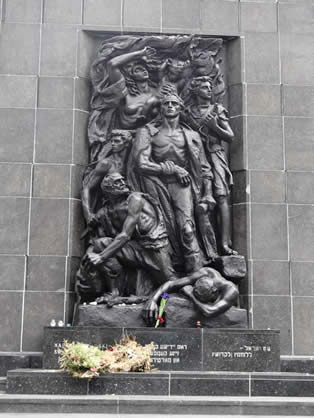
They did that first performance in Warsaw, in front of the Ghetto Fighters Memorial. This is a highly symbolic area. Solidarity first gathered here.
Christopher Hill-Ambassador to Poland at the time of the visit. Later on would become a widely acclaimed diplomat.
Chp 26 Stories, Warsaw, May 2001
At the Children of the Holocaust Association meeting, the host explains that it was not just the Communists who suppressed knowledge of the people like Sendler. But also the Polish people felt shame in the anti-Jewish feelings which was theirs during the war. They are hoping that the simple message they are bringing will be a peace in the healing of these scars. After the war, those who were with ZEGOTA or resistance were exiled or sent to prison. Each of the “Children” tell their story.
There is a bathtub story. This is a story told from Sendler’s end about four Jewish children who end up at her doorstep, smelling like the sewer. To this person, it was the best bath he has ever had. It is called a grace.
When they got back to their hotel room, they compared notes. They wondered, if they are really a farce trying to play act what happened, particularly in front of people who actually suffered. A journalist said, memories are what live on after you’re dead. Their teacher points out that they are able to tell Sendler’s story and let others know about her. They are also part of the story because of who they are and what they are doing.
Bieta notes that Sendler does not view herself as a hero, only a decent person. The real heroes are those who are like Bieta, who lived through those times, like Bieta’s Polish mother who sheltered her, like Bieta’s Jewish mother who saved Bieta.
Liz realizes that try as one might, there is no forgetting.
Jerzy Ficowski - Bieta’s husband. A significant writer in his own right. Also wrote about Bruno Schulz
MY TWO MOTHERS - Elżbieta Ficowska
Chp 27 It is Just Below Your Feet, Warsaw, May 2001
The next place on their itinerary is to visit Auschwitz. Like the Museum in Washington DC, this place broke the students, some in different ways. They realized what Sendler was trying to convey-she felt she could have done more. Then they went to Treblinka.
The next day, they took a tour of the Warsaw Ghetto. There is no complete history of the Ghetto. It is not forgotten. Every Pole knows. It is ignored.
In the Ghetto, there were three layers of Jewish: the rich, the newly rich-usually smugglers, and the people dying of starvation. All would die.
The bricks for the wall in the Ghetto is from buildings bombed by the Germans. The Jews were forced to pay for the wall. Reminds one of the Exodus stories where the Jews had to find their own stubble. The modern streets of Warsaw was built on top of the ruins of the Ghetto. The guide is asked, why didn’t the Jews in Warsaw believe the Germans were going to kill them? And when did they understand it would take place? The guide notes that it is a self-defense mechanism, or denial. They would deny this was going to happen until the deportations took place.
Sendler gave the poorest of Jews a chance for their children to escape. The rich had their means to do it, but Sendler allowed hope to the poor.
Ringelblum Archive - This archive has a testament, a plea, that future generations read these documents and remember. The guide asks the question, have we listened to the message?
Chp 28 Escape from Pawiak, Warsaw, May 2001
The history of the prison is explained from being a Czarist prison to the Communist use. Sendler prefered not to talk about this prison experience. She did type a letter which was read to them. ZEGOTA had bribed an SS officer to let her go before she was to be executed. The experience of being in Pawiak gave the students a different resolve and helped explain why Sendler did not want to talk about it.
What is a Kennkarte? basic identity document in use inside Germany (including occupied incorporated territories) during the Third Reich era.
Chp 29 “You Rescued the Rescuer”, Warsaw, May 2001
They go to the Umschlagplatz-the place where the Jews were deported to Treblinka. Professor Glowinski tells them that they rescued the rescuer. Then they visit Hanna, Jaga Piotrowska’s daughter. They want to find out what happened to the list of names. When asked about whether she was scared, she answered, After awhile, being afraid feels ordinary. One doesn’t know anything else. That has got to change a person. The street where Hanna lived hid 40 Jewish orphans-none were ever caught. There was an SS barrack across the street from them.
Chp 30 Hearts and Sunflowers, Warsaw, May 2001
They meet Sendler. There are concerns by the students of would she like them? Their teacher wondered if she would like the play?No fear. They were loved. Gifts are given-gifts of meaning.
What do the students want to know? Everything. Sendler first wants them to know about her helpers. Why did she? A need of her heart. The Polish people were drowning in tragedy, the Jews the most. What happened to the lists? One jar was broken and the lists were destroyed.The task of finding the parents were almost impossible-most were dead, so were many relatives.
As Sendler has aged, her failures to rescue children and to reunite the children has weighed on her as failures.
Chp 31 Remembrances, Warsaw, May 2001
More time with Sendler. When she was asked about a statement made by one of the survivors about there being no God. Sendler responds: There were miracle, and there was good luck. Praying kept up some people’s spirits, though the suffering was beyond understanding. At that time I did not have a strong belief in God, but there was one time when my good fortune was beyond chance, and who knows, maybe God himself had intervened.
Sendler tells more of her personal life. But she did not want to see the play-it would be too personal and hurt too much.
Asked about why she is not better known. Sendler responds that memories are painful. The world is not fair. It is up to the students to make the world a little more fair.
If fear was a kind of starvation, then anger was bread and water. While she was going to a new hiding place, she came across a poster with the current executions. Sendler’s name was on it for aiding and abetting Jews. She laughed. In her hiding, she even stayed at the Warsaw zoo a couple of days in hiding. She was not able to go to her own mother’s funeral.
And then they needed to leave to catch the plane back to the United States.
Chp 32 9/11 and a Prairie Full of Pain, Kansas and Warsaw, September 2001-Spring 2002
The students move on with their lives, still performing Life in a Jar. But also having more of their life than that. They were in NPR’s Morning Edition on September 11, 2001. It looks like it got bumped due to 9/11-at least it was not on their list for that date.
But they were asked to come to Kansas City to perform the night afterwards.Their story touched so many people during that time. The place was packed. This helped to provide scholarships to students who participated in tolerance and diversity projects.
Chp 33 Where Are You Going Now, Warsaw, 2002-2005
The growth and recognition of the project. Sabrina’s mom dies. They had a second trip to Poland to visit Sendler. They gathered more information. Not only gather information, but as the teacher said, Everybody has a story. But these people will take their remarkable stories to their graves if we don’t uncover them, write them down. That’s immortality.
Sendler is a person who naturally is comforting.
New cast members come in.
Awards and recognition of Sendler. On The Today Show .
Megan’s mother’s cancer has returned.
There is a third trip to Warsaw. New cast members come along.
Mathematics of saving a child: for each child saved, 2 to 3 times as many dies in a single day. Ten Poles and two Jews had to risk death. Only the dead have done enough.
Chp 34 The Last Visit, Kansas and Warsaw, May 2008
Megan’s mother, Debra Stewart dies. Megan becomes the Program Director for the Lowell Milken Center. This is a center promoting project-based learning of unsung heroes.
There is another visit to Poland. Sendler’s last comment to them: You have changed my country, you have changed your country, and you are changing the world. A week later Sendler died.
Epilogue
Sendler’s story was made into a Hallmark movie, Courageous Heart
Chapter recounts where the Life in a Jar project is as of the writing.
Evaluation:
Jack Mayer has managed to put together two sets of moving stories into a single cohesive book. First, there is the story of Irena Sendler who back in late 1990’s was virtually unknown to the world for the work she did saving Jewish children from the destruction of the Warsaw Ghetto in World War II. This is exciting stuff.
But the discovery of the Sendler by three high school students in Kansas which sent ripples throughout the United States and into Poland is powerful. The start was doing a project for the National History Day event ended up to be a life changing assignment for not only those three but for many people. Sendler became know for her activities. In Poland, there was a bit of trying to work through how Poles acted during World War II.
It is an emotional book. A story which should have a wider following. The writing flows and is easy to read. My one quibble with it is right at the start, Mayer notes that the book is non-fiction, but he filled in gaps in the story, particularly in the conversations. Still this is the type of book which leaves you wanting more.
Notes from my book group:
- Saxophone music which Liz played: Eugene
Bozza - Aria - Arno Bornkamp (4 minutes)
- Today Show
on Life in a Jar (4+ minutes)
- Kansas
State University's documentary on Life in a Jar
(15 minutes) Look towards the bottom of the page for the
documentary
- MY
TWO MOTHERS by Elżbieta Ficowska
- Some pictures:
- Elżbieta Ficowska - Wiki Commons
- Warsaw
Ghetto Fighter Memorial - The
Society Pages
- Umschlagplatz - WikiCommons
- Umschlagplatz, the Memorial - WikiCommons
This book is about three high school students, their teacher and Irena Sendler. Which is central to this book, Sendler or the students? Who affected you most?
What decisions did each of the students have to make to be part of this project?
Notice in a January 20, 1940 decree called the typhus situation a Jewish epidemic. By placing a nationality in front of a medical situation, what does that do to the threat? What were the Germans trying to do? Is there ever a right place to do this?
Sendler’s
father taught her that People
are all the same-there are only good people or bad people..
Discuss this. How true is this statement? Can you divide people up
this way? More of a continuium.
Sendler
used the fear of disease to an advantage in hiding rations for Jewish
people. Discuss the ethics of this. Is falsifying records to do good
something which you as a person or a Christian would do without
feeling guilty? How do you separate out bad actions in a good cause
from being immoral? The ends justify the means? Do you throw out
ethics when you get into a situation this bad? One should strive for the greater good.
In Chp 11, When Sendler could not help an elderly woman who had been hit, she felt the burgeoning vigor of her anger far outweighs her fear, and that in and of itself was a welcome revelation. What did Sendler realize?
Chp 15 talks about the rescue of Beryl, a beggar close to death. Why does Sendler risk her life for one child? What difference does that make?
Sendler makes what she calls a devil’s bargain with Schmuel: knowledge of the next deportation to not alert residents of it. She could only save people’s children. Would you have made this choice: to do wrong to do right? Are there other instances in this story where Sendler needs to make this choice? Or in other situations? (Maybe like Coventry?) What would be your solution? Where do we encounter these situations in fiction? (Example, Star Trek’s Kobayashi Maru. )
The question which the Warsaw guide asks is, have we listened to the message? Ringelblum Archive - This is the set of documents about the Warsaw Ghetto. How do you answer this question?
Ewa’s final words to Sendler are Above all - bear witness. What is she to bear witness to? Was Sendler able to do this? If so, how was she able to? Is there something you have been asked to bear witness to? Why was it important to the other person? How have you done this?
Sendler observes a woman tossing her baby over the Ghetto wall. When you read this, what effect did it have on you? What would cause you to give up your baby? Would it have been better if the baby had never been born?
Bieta is baptized so she can obtain papers. This is a point of contention to this day of Jews who viewed this as another instance of Christians forcing their religion on Jews. What is your take on this? Would you, as Chrisians, give your children to become Muslim in order to survive?
When a courier is captured, the question arises, how much is a life worth? What is your answer? How does this question arise even today?
John 15:13, Greater love has no one than this: to lay down one’s life for one’s friends., is used as the basis for a Catholic Convent to house Jewish children. How is this related? What basis does this have for action today?
After the destruction of the Jewish Ghetto, Sendler thinks, It was rescue that had given meaning to chaos and cruelty. What does this mean? Why? What gives meaning to our actions?
When Sendler is arrested, the author raises the question of being executed for having been decent-kindness a capital crime. What would be a legitimate reason for a government to punish kindness? Do we have those situations today?
Sabrina asks, who are we to tell the Polish people about their history? What would be your answer? Who should tell a nation’s or culture’s history? Why didn’t Sendler tell her own story?
A central question in the book, overlaid by Liz’ mother’s decision to leave her, is: How do you think people go about making these huge decisions, like Irena deciding to rescue children? Like parents giving away their kids?
Upon seeing the play, one of the concentration camp survivors said, it is good to weep and remember what happened to us… not all of our tears are the same. You tell a simple story … that tells a simple and dramatic truth. How did the story affect you? How do you want your life to change because you read this book?
Bieta notes that Sendler does not view herself as a hero, only a decent person. Why does Sendler think this? What is a hero? What is a decent person? Who do you think is a decent person? A hero by Sendler’s definition? How does this view of her failures fit into her perception of not being a hero? She quotes Wladyslaw Bartoszewski, saying Only the dead have done enough.
There is no complete history of the Ghetto. It is not forgotten. Every Pole knows. It is ignored. How could the Polish people ignore this history? Are there things we as Americans ignore?
Why didn’t the Jews flee when they had a chance? The Jews did not believe that they would be exterminated in Warsaw. Why? What lesson do we have when we are given projected bad news?
Hanna was asked about being scared. She replied, After awhile, being afraid feels ordinary. One doesn’t know anything else. Describe a time you were scared. How did it feel? Could you have been scared like that for six years? Or more? What would happen to you?
Why does Sendler wait so long to meet the students?
Why did Irena get into rescuing children? Why didn’t more Poles than around 1% help the Jews? Under what circumstances would you risk death for someone else? What criteria would the other person have to meet? What risk would you need to overcome? Would I do this, knowing that I would probably get killed? Or even your whole family?
The students participated in the project into their 20’s and 30’s. Megan Stewart Felt is the person in charge of promoting additional projects. What is driving these students to dedicate a major part of their lives well after most high school projects have faded from memory?
Normal Conard said Everybody has a story. But these people will take their remarkable stories to their graves if we don’t uncover them, write them down. That’s immortality. Much of the story of this book is about memories. The memories of the survivors. Memories about what happened. Memories which were suppressed. Even though these students are young, what memories do they struggle with, both personal and in what they are hearing? Which memories presented talked to you the most? Is that the function of the books we read is to make memories? memories are what live on after you’re dead.
Many of these questions are either from or adapted from LitLovers.
- Why the title of Life in a Jar?
- Does this story work as a history/biography?
- Did the ending seem fitting? Satisfying? Predictable?
- Which person was the most convincing? Least?
- Which personr did you identify with?
- Which one did you dislike?
- Every story has a world view. Were you able to identify this story’s world view? What was it? How did it affect the story?
- In what context was religion talked about in this book?
- Was there anybody you would consider religious?
- How did they show it?
- Was the book overtly religious?
- How did it affect the book's story?
- Why do you think the author wrote this book?
- What would you ask the author if you had a chance?
- What “takeaways” did you have from this book?
- What central ideas does the author present?
- Are they personal, sociological, global, political, economic, spiritual, medical, or scientific
- What evidence does the author use to support the book's ideas?
- Is the evidence convincing...definitive or...speculative?
- Does the author depend on personal opinion, observation, and assessment? Or is the evidence factual—based on science, statistics, historical documents, or quotations from (credible) experts?
- What implications for you, our nation or the world do these ideas have?
- Are these idea’s controversial?
- To whom and why?
- Describe the culture talked about in the book.
- How is the culture described in this book different than where we live?
- What economic or political situations are described?
- Does the author examine economics and politics, family traditions, the arts, religious beliefs, language or food?
- How did this book affect your view of the world?
- Of how God is viewed?
- What questions did you ask yourself after reading this book?
- Talk about specific passages that struck you as significant—or interesting, profound, amusing, illuminating, disturbing, sad...?
- What was memorable?
New Words:
- Digitalis (11): drug obtained from the dried leaves of the common foxglove (Digitalis purpurea) and used in medicine to strengthen contractions of the heart muscle.
- Homeostasis (12): the tendency toward a relatively stable equilibrium between interdependent elements, especially as maintained by physiological processes.
- Carbide lamp: simple lamps that produce and burn acetylene (C2H2) which is created by the reaction of calcium carbide (CaC2) with water (H2O).
- Trompe d’oeil (29): an art technique that uses realistic imagery to create the optical illusion that the depicted objects exist in three dimensions
Book References:
- The Diary of Anne Frank by Anne Frank
- Warsaw Ghetto Diary by Mary Berg
- Life in Lodz by Dawid Sierakowiak
- Berlin Diary by William Shirer
- Crime and Punishment by Fyodor Dostoevsky
- King Matt the First by Dr. Janusz Korczak
- How to Love a Child by Dr. Janusz Korczak
- The child’s Right by Dr. Janusz Korczak
- Talmud
- Kabbalah
- Neighbors: The Destruction of the Jewish Community in Jedwabne, Poland by Jan Tomasz Gross
- The Black Seasons by Michał Głowiński
- The Warsaw Ghetto: A Guide to the Perished City by Jacek Leociak
Good Quotes:
- First Line: Liz pressed her forehead against the jet window, staring hard at the sun just pricking the ocean’s black edge.
- Last Line: Every year the Irena Sendler Award, generously funded by Metuka Benjamin and the Goldrich Family Foundation, presents $10,000 too the teacher in Poland and in the U.S. who best present Holocaust education in their schools in the spirit of Irena Sendler, developing and enlisting unique and creative methodologies.
- ordinary people who made a big difference. And so can you. Anything you do to repair the world is heroic. Norm Conrad, Chp 4 Research-Kansas, 1999
- compassion and the law were sometimes at odds. Chp 8 Invasion, Warsaw, September 1939
- People are all the same-there are only good people or bad people. Chp 11 Occupation
- Hate wears you down and does not hurt your enemy. It’s like taking poison and wishing your enemy would die. Chp 24 Benefactors, Kansas, July 2000-May 2001
- memories are what live on after you’re dead. Chp 26 Stories, Warsaw, May 2001
- Author’s note
- Part One Kansas September 1999-February 2000
- Chp 1 A Chip on Her Shoulder-November 1999
- Chp 2 Picking Rock-Kansas, 1999
- Chp 3 The Irena Sendler Project-Kansas, 1999
- Chp 4 Research-Kansas, 1999
- Chp 5 Millennium-Kansas, December 1999-January 2000
- Chp 6 Opening Night-Kansas, January 2000
- Chp 7 Where is Irena Buried?-Kansas Februar 2000
- Part Two Warsaw, September 1939-January 1944
- Chp 8 Invasion, Warsaw, September 1939
- Chp 9 Bread Lines, Warsaw, October 1939-January 1940
- Chp 10 Decrees, Warsaw, October 1939-January 1940
- Chp 11 Occupation
- Chp 12 The Warsaw Ghetto, October 1940 - January 1941
- Chp 13 Shrinking the Ghetto, Warsaw, October - December 1941
- Chp 14 Beggars and Orphans, Warsaw, January - February 1942
- Chp 15 Dangerous Rescues, Warsaw, February - April 1942
- Chp 16 A Silver Spoon, April-July 18, 1942
- Chp 17 - Liquidation, Warsaw, July-August 1942
- Chp 18 Deportation, Warsaw, July 22-August 1942
- Chp 19 Resistance, Warsaw, August-December 1942
- Chp 20 Zegota, Warsaw, November 1942-February 1943
- Chp 21 A Warm Bath, Warsaw, January 1943-October 1943
- Chp 22 Pawiak Prison, Warsaw, October 1943-January 1944
- Part Three Kansas and Warsaw, February 2000-May 2008
- Chp 23 National History Day, Kansas, Feb-May 2000
- Chp 24 Benefactors, Kansas, July 2000-May 2001
- Chp 25 We’re Not in Kansas Anymore, Warsaw May 2001
- Chp 26 Stories, Warsaw, May 2001
- Chp 27 It is Just Below Your Feet, Warsaw, May 2001
- Chp 28 Escape from Pawiak, Warsaw, May 2001
- Chp 29 “You Rescued the Rescuer”, Warsaw, May 2001
- Chp 30 Hearts and Sunflowers, Warsaw, May 2001
- Chp 31 Remembrances, Warsaw, May 2001
- Chp 32 9/11 and a Prairie Full of Pain, Kansas and Warsaw, September 2001-Spring 2002
- Chp 33 Where Are You Going Now, Warsaw, 2002-2005
- Chp 34 The Last Visit, Kansas and Warsaw, May 2008
- Epilogue
- Postscript
- Where Are They Now? February 2010
- Acknowledgements from the Irena Sendler Project
- Author Acknowledgements
- Bibliogrpahy
References: Author's Web Site
- Amazon-Book
- Amazon-Author
- Barnes and Noble
- GoodReads-Book
- GoodReads-Author
- Tuesday, September 11, 2001 line up
- Remembering Irena Sendler
- Kirkus Review
- YouTube
- Irena Sendler Foundation
- History Is Important blog
- Megan Stewart Felt’s TED Talk on the Irena Sendler Project
- Lowell Milken Center
- Kansas History Society
- Foreward Reviews


.jpg)